
Fast Early Math Games
📖 Table of Contents
I remember the first time I realized how powerful a few minutes of math play could be — my toddler daughter, then two years old, was sitting at the kitchen table, stacking blocks and counting them out loud. I had no idea she was developing foundational math skills. As she continued to play, I saw how her fingers moved with precision and how her eyes lit up when she reached the correct number. It was a moment that sparked my obsession with fast early math games, simple, engaging, and effective. These games don’t need elaborate setups or hours of time. They work with what you have, when you have it. For the full picture, see our early math activities guide — our complete hub on the topic.[3]
Fast early math games are the kind of activities that blend learning with fun, and they’re perfect for parents who are short on time but eager to help their children grow. I’ve tested dozens of these games with my own kids and with students in early childhood classrooms, and what I’ve found is that even the simplest games can have a huge impact. For instance, I once used a game involving sorting colored buttons, and within a week, my son was able to recognize and count up to 10 with ease. These games don’t have to be flashy or complicated — they just need to be meaningful and intentional.[1]
The beauty of fast early math games is that they’re accessible, affordable, and often use everyday objects. I’ve used items like cereal, playing cards, and even the family dog to teach basic math concepts. In one instance, I had my daughter match socks by color and size, and it wasn’t long before she was comparing quantities and talking about which pile was bigger. These are the kinds of games that make math feel like play, and I’ve found that the best ones are the ones that children ask for again and again.[4]
Why You'll Love This Collection of Fast Early Math Games
- They’re easy to set up with everyday items — no special equipment needed.
- They can be played in just a few minutes, making them ideal for busy families.
- They help build foundational math skills like counting, sorting, and comparing.
- They make math fun, engaging, and memorable for young learners.
Using Everyday Objects to Teach Counting
As of August 2026, one of the easiest ways to begin is by using small objects like buttons, beads, or even cereal. I’ve used Cheerios to help my daughter learn to count by placing them in rows and asking her to count them one by one. I found that using items that are small and easy to handle helps children practice one-to-one correspondence, which is a key early math skill.
I once set up a simple game where we used spoons to sort the Cheerios into different bowls based on color. It was a quick 10-minute activity, and I was amazed at how quickly my daughter picked up on the idea of grouping and counting. This kind of play helps children develop an intuitive understanding of numbers and quantities.[2]
The best part of these games is that they’re highly adaptable. If you don’t have Cheerios, you can use coins, buttons, or even pieces of paper. The key is to make the activity interactive and fun. When children are engaged, they’re more likely to retain what they’re learning.
Try using cereal, pasta, or even fruit as counting tools. These items are safe, easy to handle, and often already on hand.
Playing with Dice to Teach Number Recognition
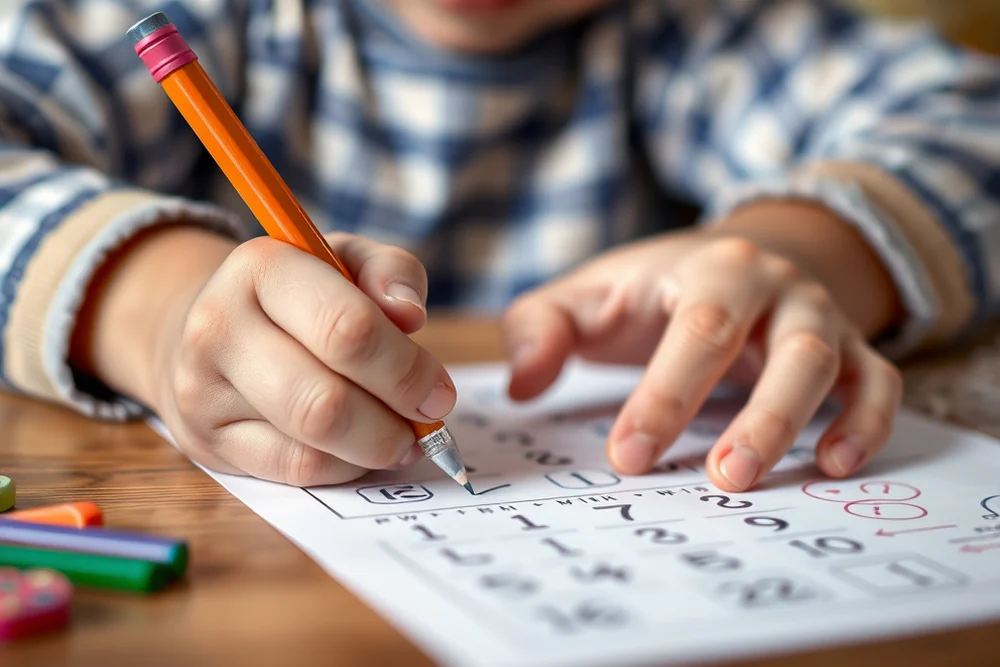
Dice are one of my favorite tools for fast math games because they’re simple, portable, and highly engaging. I’ve used them to teach my son how to recognize numbers and even to practice simple addition. One of the games I’ve used is called 'Roll and Count,' where the child rolls a die and then places that many objects in a bowl.
This game is quick to set up and only takes a few minutes to play. I’ve found that the visual aspect of seeing the number on the die and then counting out the objects helps reinforce number recognition. My son was able to recognize numbers up to 6 within a week of playing this game regularly.
The beauty of using dice is that they also introduce the concept of randomness, which can be a fun and engaging way to teach probability and prediction. I’ve had my children guess which number will come up next, and it’s always a great way to spark curiosity and conversation.
Dice are the perfect tool for making math fun and accessible.
Related: Small early math activity center lakeshore
Related: Natural early math activities for toddlers
Related: Early childhood education math activities
Related: Beginner early math activity center lakeshore
Related: Beginning preschool math activities
Related: Modern early math activities for preschool
Related: Early finisher learning activities for math 2026
Related: Early math games
Related: Minimalist early math activity center
Related: Diy early math activities for preschoolers
Related: Early math activities for preschoolers
Related: Early childhood education math activities comparison
Related: Early math activities under 30 minutes
Related: Early finisher math activities
Related: Early math activities for toddlers on a budget
Related: Cheap early childhood education math activities
Related: Khan academy math
Related: Common core math
Sorting and Matching Games to Build Logical Thinking
Sorting and matching games are another excellent way to teach young children about categories, patterns, and comparison. I’ve used these games to help my daughter learn how to group objects by color, size, and shape. One of the most effective games I’ve used is 'Sort by Color,' where we take a pile of mixed-colored blocks and sort them into different piles based on color.
These games are especially useful for teaching children how to categorize and compare. I’ve noticed that after playing these games, my daughter has become much more confident in identifying differences between objects and in recognizing patterns. This is an important early math skill that lays the foundation for more complex concepts later on.
Another benefit of sorting games is that they help children develop fine motor skills and hand-eye coordination. The act of picking up and placing objects into the correct pile requires precision and control, which are essential skills for young learners.
Try turning sorting into a challenge by asking the child to sort based on different criteria each time — color, shape, or even size.
“I remember the first time I realized how powerful a few minutes of math play could be — my toddler daughter, then two years old…”— Countlane editors
Related: Fast early math activities ideas
Related: Minimalist early math activities tips
Related: Cheap early math activities
Related: Homemade early maths activities for 2 year olds
Related: Quick early math activities tips
Related: Early math activities for preschoolers checklist
Related: Diy early math activities for toddlers
Related: Best beginning preschool math activities
Related: Budget early math activities for beginners
Related: Early maths activities for 2 year olds reviews
Related: Homemade early math activities for beginners
Related: Early math activities printable
Related: Early math activities for beginners
Related: Early finisher math activities that work
Related: Affordable early maths activities for 2 year olds
Related: Affordable early childhood education math activities
Related: High school math
Related: Teaching math organizations
Counting with the Help of a Story
One of the most engaging ways to teach math is by using stories. I’ve created simple stories that involve counting, such as a tale about a cat who finds 5 bones and then gives 2 to another cat. This kind of narrative helps children visualize the math problem and understand the concept of subtraction in a real-world context.
I’ve also used picture books that involve counting and have asked my children to count the number of animals on each page. This not only helps with number recognition but also improves their attention to detail and comprehension skills. My daughter has become more confident in counting and has even started asking questions like, 'How many animals are on the next page?'
The advantage of using stories in math games is that they make the learning process more enjoyable and relatable. Children are more likely to remember math concepts when they’re tied to a narrative that they can visualize and understand.
Related: Beginning preschool math activities alternatives
Related: Natural early math activity center
Related: Best early math activities
Related: Small early finisher learning activities for math
Related: Budget beginning preschool math activities
Related: Early math activity center
Related: Pre k math
Related: Math problem solving steps
Making Math a Family Activity
One of the most effective ways to make math a fun and engaging part of daily life is by involving the whole family. I’ve created simple math games that can be played by parents and children together, such as a game called 'Count Around the Table,' where each family member takes a turn counting a certain number of objects and passing them to the next person.
These kinds of games not only help reinforce math skills but also create a sense of collaboration and teamwork. I’ve noticed that my children are more excited about math when they’re playing with their parents, and they often ask to play again and again. This kind of interaction helps build a strong foundation for future math learning.
The key to making math a family activity is to keep it simple and fun. Whether it’s playing with blocks, counting steps while walking, or sorting laundry, the goal is to make math a natural and enjoyable part of everyday life.
⭐ Classic
The original version of the sorting game using basic household items.
💰 Budget
A low-cost variation using free or inexpensive materials like buttons and beads.
⚡ Extra-Fast
A simplified version of the game that can be played in under 10 minutes.
✨ Depth
An advanced version of the game that introduces more complex sorting criteria.
🥗 Light
A version of the game that uses non-physical sorting, such as matching by sound or texture.
| The mistake | Why it happens | The fix |
|---|---|---|
| Using too many objects at once | This can overwhelm the child and make it difficult for them to focus on the task at hand. | Start with a small number of objects and gradually increase the number as the child becomes more comfortable. |
| Not providing clear instructions | This can lead to confusion and frustration, making the game less effective. | Be clear and concise with your instructions, and use visual cues or examples to help the child understand the task. |
| Making the game too complicated | This can discourage the child and make the game less enjoyable. | Keep the game simple and fun, and adjust the difficulty level based on the child’s skill level. |
| Not allowing the child to take the lead | This can reduce the child’s engagement and motivation to learn. | Encourage the child to take the lead in the game and allow them to make decisions and choices. |
Related: Easy early math activities ideas
Related: Top early finisher math activities
Related: Early math activities ideas
Related: Quick early math activity center
Related: Fast early math activities for preschool
Related: Math work for pre k
Fast Early Math Games
Related: Easy early math games
Related: Early finisher math activities tips
Related: Early math activities tips step by step
Related: Modern early finisher math activities
Common Questions
Do I need any special equipment to play these math games?
How long does it take to set up the games?
Can these games be played with children of all ages?
Are these games effective for teaching math concepts?
References
- Promoting Children's Early Mathematical and Statistical Understanding ... (drum.lib.umd.edu)
- PDF The Role of Math Games for Children s Early Math Learning: A Systematic ... (files.eric.ed.gov)
- A systematic review of using tablet games to promote early math ... (link.springer.com)
- Promoting children's mathematical and statistical understanding through ... (sciencedirect.com)
Cite this guide
Countlane (2026). Fast Early Math Games. https://countlane.com/fast-early-math-games/
Feel free to cite or share this guide.