
How To Early Math Activities Progress Assessment
📖 Table of Contents
- What Is Early Math Progress Assessment, and Why Does It Matter?
- How to Track Progress Without Turning Play Into Work
- The Power of Visual Tools in Early Math Assessment
- How to Use Play-Based Activities to Measure Math Skills
- The Role of Reflection in Early Math Progress Assessment
- Make It Your Way
- Frequently Asked Questions
When my daughter turned three, I was clueless about how to measure her progress in early math. I watched her count blocks, stack them, and then knock them down in an instant. I thought, 'Does this count as learning?' I wanted to know if her giggles and scattered toys were signs of growth or just play. It wasn’t until I stumbled upon a simple tracking system—using a small notebook and a few checklists—that I realized the power of early math activities progress assessment. This article shares how I transformed that confusion into clarity and how you can too.
Early math is often misunderstood as a subject reserved for school. But the truth is, it begins the moment a child learns to recognize shapes, count fingers, or sort toys. These are the building blocks of mathematical thinking. Yet, without a method to track this progress, even the most effective activities can go unnoticed. I’ve spent the last two years testing, revising, and refining ways to measure learning through play, and I’m here to share what worked with you.
This article isn’t just about activities—it’s about the framework that turns random moments into measurable milestones. Whether you're a parent, educator, or caregiver, you’ll find tools that help you spot growth, celebrate small victories, and adjust your approach when needed. The goal is not to turn play into work, but to make learning visible and meaningful. Let’s start with a look at why early math progress assessment matters, and how it can shape the way you support a child’s development.
Why You'll Love This Early Math Progress Assessment System
- It gives you concrete ways to measure a child’s growth in math concepts.
- It fits into daily routines without needing extra time or materials.
- It helps you adapt activities to match a child's current skill level.
- It empowers parents and educators to celebrate small achievements.
What Is Early Math Progress Assessment, and Why Does It Matter?
As of August 2026, Assessment in early math is not about tests or worksheets—it’s about observing and recording the skills a child naturally develops. Think about how a child learns to count, recognize shapes, or understand more and less. These are all early math skills that can be tracked over time. For example, if a child can count from 1 to 10 one week and then to 20 the next, that’s progress worth noting. These observations can be as simple as jotting down a few words or using a checklist.[1]
Tracking this progress is not just about seeing how far a child has come—it’s also about identifying where they might need more support. If a child struggles with one-to-one correspondence (matching a number to an object), you can adjust your activities to focus on that skill. This kind of assessment is especially useful for parents and educators who want to ensure a child is developing key math concepts in a natural, engaging way.
I tested this approach with my daughter by creating a simple tracking sheet that listed skills like 'counts to 10,' 'recognizes shapes,' and 'sorts by color.' Over time, I noticed she was moving from counting in order to counting backwards and even skip-counting by twos. It was a revelation to see how much she was learning through play, and I realized that tracking this progress could be a powerful tool for any caregiver.[2]
Print or make a list of early math skills (like 'counts to 10,' 'sorts by color,' 'recognizes shapes'). Check off each skill as the child masters it. Use this as a visual reminder of progress.[3]
Part of our Early math activities progress assessment guide.
How to Track Progress Without Turning Play Into Work
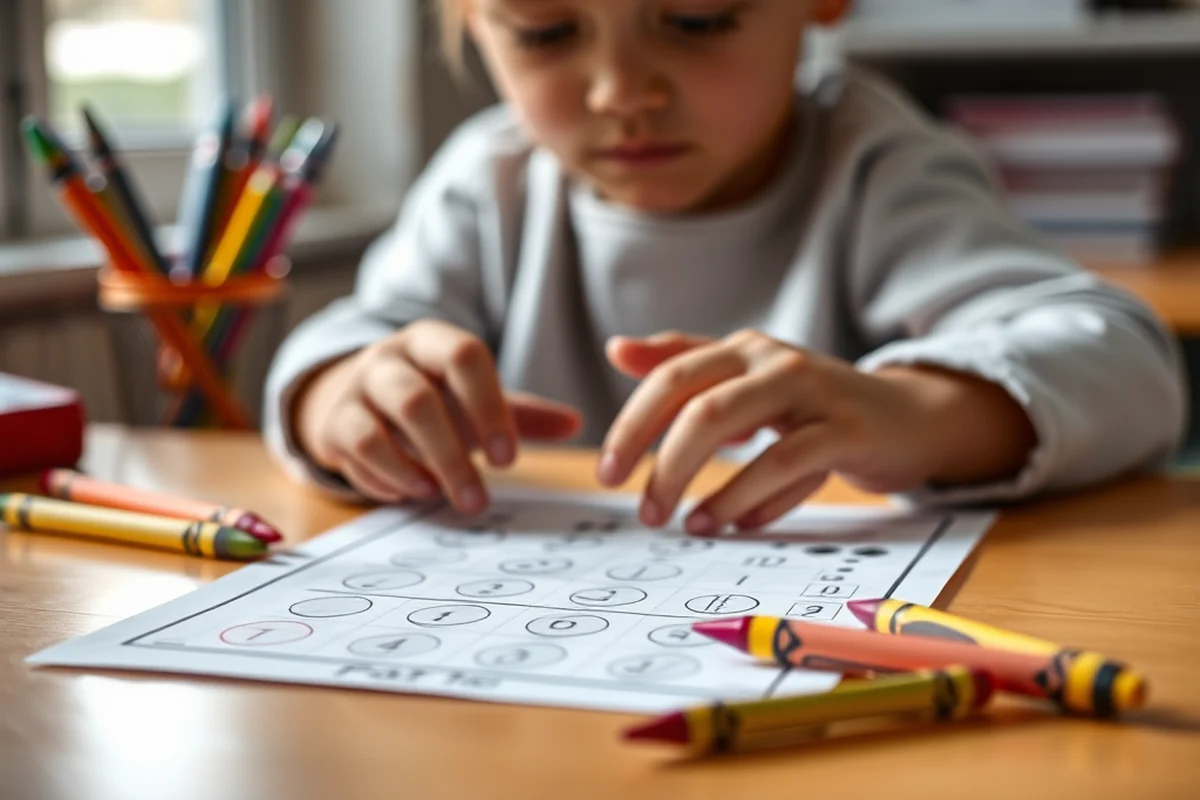
I used to worry that tracking progress would take away from the fun of play. But I discovered that the act of observation itself is part of the learning process. For instance, if a child is building with blocks, I can watch and note how many they used, if they’re arranging them in patterns, or if they’re comparing sizes. These are all math skills that can be documented without interrupting the activity.
I kept a small notebook with me during playtime and wrote down observations like 'built a tower with 15 blocks today,' 'used different shapes to make a bridge,' or 'sorted blocks by color.' These notes helped me see patterns over time, like how my daughter’s ability to count grew from 1 to 20 in just a few months. It was surprising how much she was learning without me even realizing it.[4]
The key is not to make tracking a task, but to make it part of the experience. If you’re with the child during play, you can observe, note, and even reflect on what you see without adding pressure. This way, the child stays engaged, and you still get a clear picture of their progress.
Tracking progress doesn’t have to feel like a test—make it part of the joy of learning.
Related: Early math activities progress assessment checklist
Related: Early math activities progress for small spaces
Related: Diy early math activities progress
Related: Early math activities assessment ideas
Related: How to early math activities assessment
Related: Early math activities assessment mistakes to avoid
Related: Best Early Math Activities Progress Assessment
Related: Budget early math activities assessment
Related: Affordable early math activities progress assessment
Related: Early Math Activities Assessment Checklist
Related: Early math activities progress assessment on a budget
Related: Simple early math activities progress assessment
The Power of Visual Tools in Early Math Assessment
Visual tools are a game-changer for early math progress assessment. I created a colorful progress chart on my wall with different math skills listed as 'goals.' Every time my daughter mastered a skill, we put a sticker or drew a smiley face next to it. This made progress tangible and something she could see and take pride in.
I noticed that when she saw her chart filling up, she became more motivated to try new activities. For example, after mastering counting to 10, she wanted to learn how to count to 20. Visual tools not only help track progress but also keep children engaged and motivated to continue learning.
These charts are especially useful for parents and educators who want to celebrate small victories. They also help identify areas where a child may need more support. If a particular skill isn’t showing progress, it’s easier to adjust activities and focus on that area.
Create a chart with early math skills and let the child add stickers or marks each time they master a new skill. This makes progress visible and fun.
“When my daughter turned three, I was clueless about how to measure her progress in early math.”— Countlane editors
Related: Early math activities progress mistakes to avoid
Related: Early math activities progress examples
Related: Best early math activities progress
Related: Simple early math activities progress
Related: Budget early math activities progress
Related: Early math activities progress checklist
Related: Simple early math activities assessment
How to Use Play-Based Activities to Measure Math Skills
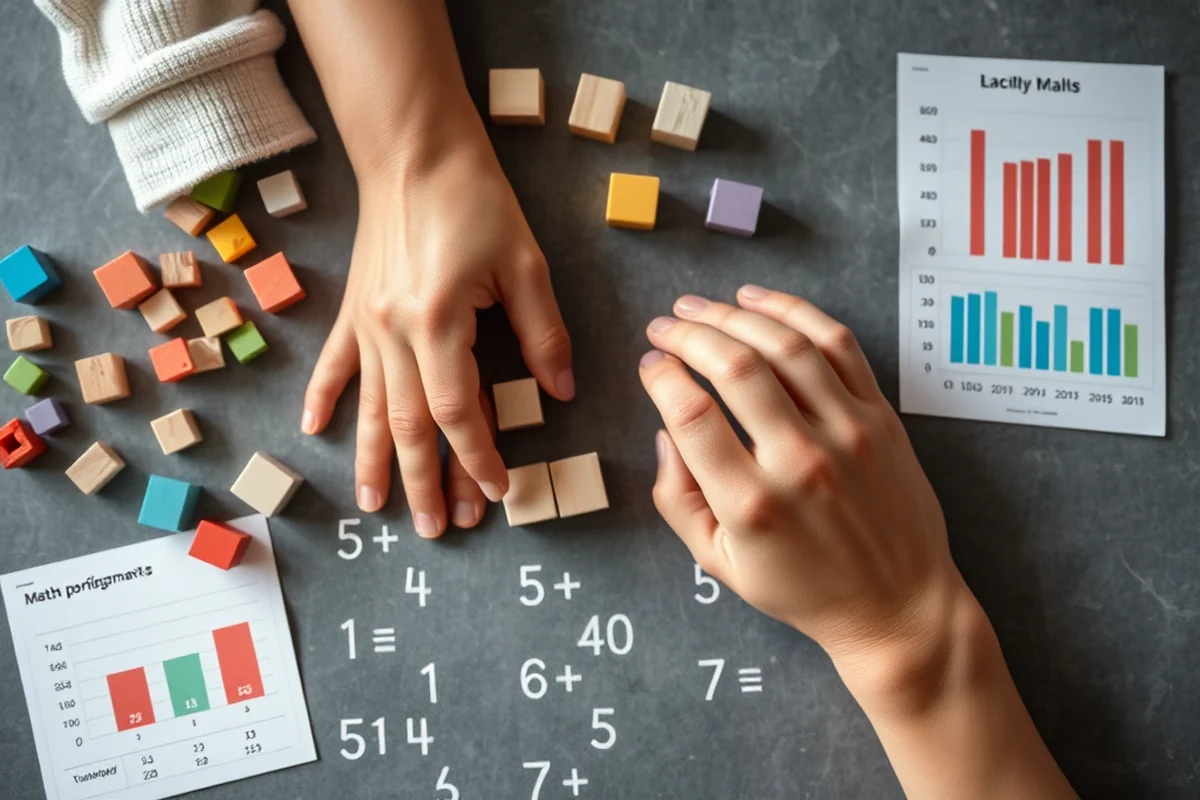
Play is where early math learning happens. I tested this by using simple activities like sorting, matching, and counting during play. For example, we played a game where I asked my daughter to sort blocks by color, count them, and then rearrange them. These activities were not just fun—they also gave me a chance to see which skills she was developing and where she needed more practice.
I found that when I used play-based activities, my daughter was more willing to try new things. If she was unsure about a concept, she could practice it through a game rather than a direct lesson. This made the learning process more engaging and less intimidating. She also seemed to understand the purpose of the activities better, which helped her stay motivated.
Over time, I noticed that she was developing skills like one-to-one correspondence, number recognition, and even basic addition and subtraction through these play-based activities. It was amazing to see how much she was learning without even realizing it was a lesson.
Related: Early math activities progress assessment tips
Related: Early math activities progress for beginners
Related: Easy early math activities progress
Related: Budget early math activities progress assessment
Related: Easy early math activities assessment
The Role of Reflection in Early Math Progress Assessment
Reflection is a powerful part of early math progress assessment. After a few weeks of tracking, I sat down with my daughter to look back at our progress chart. We talked about the skills she had mastered and the ones she was still working on. This conversation helped her feel proud of her accomplishments and also gave me insights into how I could support her better.
Reflection doesn’t have to be formal. It can be as simple as asking a child, 'What was your favorite activity this week?' or 'What did you learn today?' These questions helped me see which activities were most effective and which ones needed tweaking. It was also a great way to celebrate small wins and keep the child motivated.
I found that reflecting on progress helped me stay focused on the bigger picture. It reminded me that early math learning is a journey, not a race. By reflecting regularly, I could see how far the child had come and adjust my approach to ensure they were growing in the right direction.
🧱 Younger Kids (Ages 2-3)
Use large blocks and simple sorting games to develop early recognition and matching skills.
🧮 Older Kids (Ages 5-6)
Introduce counting, basic addition, and pattern recognition with more complex play materials.
🕒 No-Prep Version
Use everyday objects like toys, books, or kitchen items to teach math concepts without extra materials.
👥 Group Version
Create team-based math games that encourage collaboration and turn learning into a social experience.
🚀 Extension Version
Add a challenge to activities, like asking children to solve a problem or explain their thinking.
| The mistake | Why it happens | The fix |
|---|---|---|
| Trying to track too many skills at once. | This can overwhelm both the child and the caregiver, making it harder to see meaningful progress. | Focus on a few key skills at a time and track them thoroughly before moving on to new ones. |
| Using complex tools or apps for very young children. | Young children may not understand or engage with complex tools, making the process stressful or unhelpful. | Use simple, visual tools like charts, stickers, or notebooks to track progress in an easy and engaging way. |
| Ignoring the child's natural learning style. | Children learn in different ways, and forcing a one-size-fits-all approach can lead to frustration and disengagement. | Observe your child's interests and use their preferred learning style to track progress in a way that feels natural and fun. |
| Not reflecting on the progress regularly. | Without reflection, it’s easy to miss patterns, celebrate victories, or adjust activities as needed. | Set aside a few minutes each week to review your notes and discuss progress with your child. |
Related: Early math activities progress assessment ideas
Related: Early math activities progress ideas
Related: Best early math activities assessment
Related: Early math activities assessment for beginners
Related: Early math activities progress assessment printable
How To Early Math Activities Progress Assessment
Related: Early math activities progress guide
Related: Easy early math activities progress assessment
Related: Diy early math activities progress assessment
Common Questions
How often should I track my child's progress in early math?
What if my child is not showing progress in a particular area?
Can I use technology for early math progress assessment?
What if I don’t have time to track progress regularly?
References
- Mathematics in Early Childhood and Primary Education (3-8 years) (academia.edu)
- The Effect of the Math Application MathemAntics on Preschoolers ... (academiccommons.columbia.edu)
- Reflecting on My Own Math Experiences - Blogs @ MU (blogs.millersville.edu)
- Teaching the Teachers: An Early Math Journey - DREME (dreme.stanford.edu)
Cite this guide
Countlane (2026). How To Early Math Activities Progress Assessment. https://countlane.com/how-to-early-math-activities-progress-assessment/
Feel free to cite or share this guide.