
Math Play Zone
📖 Table of Contents
I remember the first time my daughter saw a math puzzle on the floor of our living room. It was a simple pattern of colored blocks, but to her, it was a doorway to something new. That moment sparked the idea for the Math Play Zone — a space where learning feels like play, and math becomes something tangible, something fun. The zone isn’t just about numbers; it’s about curiosity, creativity, and discovery.[1]
The Math Play Zone started as a corner of our home where we experimented with counting, shapes, and early problem-solving. We used everyday items — cardboard boxes, buttons, and even leftover craft supplies — to build puzzles and games. What we discovered was that math doesn’t need to be confined to textbooks. It can be built, touched, and explored in ways that make sense to young minds.[2]
Over time, we refined our approach and realized that the Math Play Zone wasn’t just a learning tool for kids. It became a space that brought our whole family together. Whether we were solving a fraction puzzle or counting how many steps it took to reach the kitchen, we were all learning — and laughing — along the way.
Why You'll Love This Math Play Zone
- It transforms abstract math concepts into hands-on, real-world experiences.
- It fosters a love of learning through play, not pressure.
- It makes math accessible and engaging for all ages.
- It can be customized to suit different learning styles and abilities.
What Is a Math Play Zone?
As of September 2026, a Math Play Zone isn’t just a corner of the house — it’s a learning environment designed to spark interest in math through interaction. We set up this space with a variety of activities that engage different senses and learning styles. One day, it might be a puzzle with numbers on it; another day, it could be a game that teaches counting or shapes.
In our zone, we’ve used items like large number tiles, pattern blocks, and even a simple abacus. Each item is chosen to make math more tangible and less intimidating. We noticed that when we left the zone open for exploration, our daughter would spend hours figuring out patterns or counting objects without being asked.
Setting up the zone was a process of trial and error. We started with just a few items and expanded as we saw what worked best. Now, it’s a space where math doesn’t feel like homework — it feels like play.
Don’t feel pressured to fill the whole space at once. Start with a few activities and gradually add more as your child shows interest. This approach helps keep the zone engaging without overwhelming.
Part of our Early math activities activities games guide.
How to Set Up Your Zone
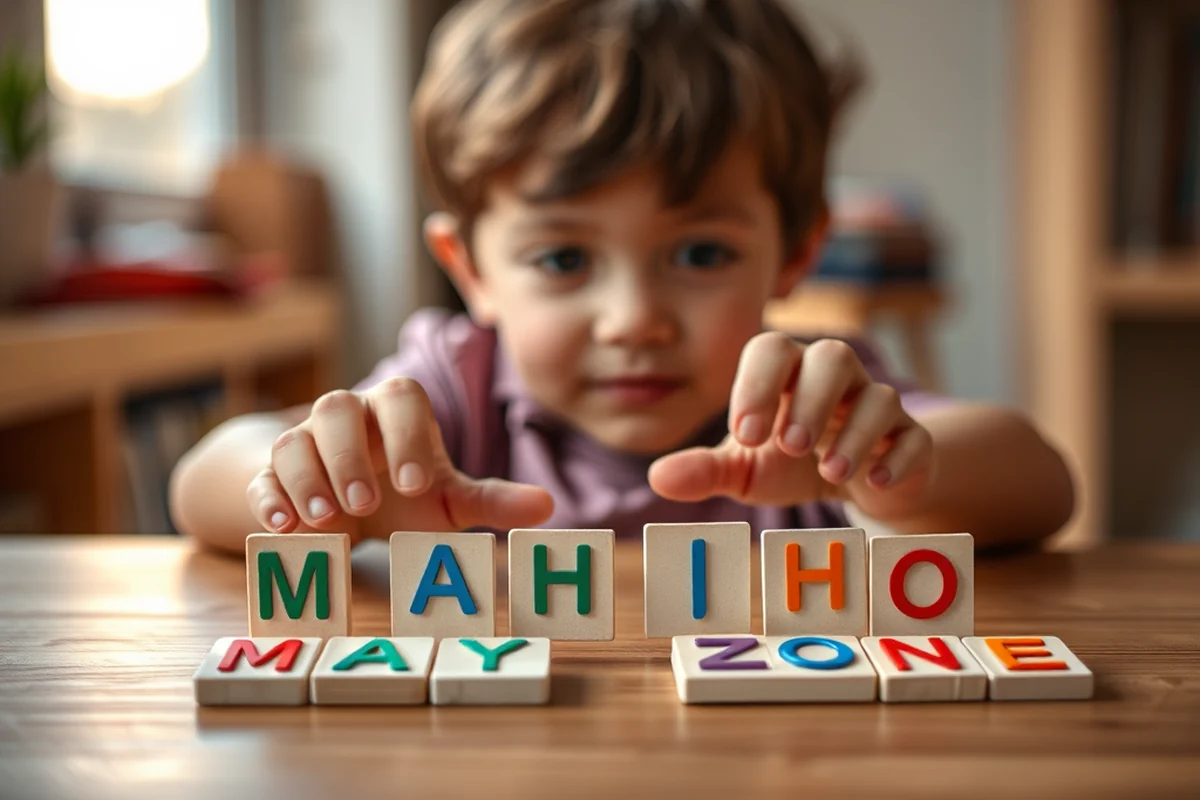
We chose a corner of our living room for the zone because it was already a high-traffic area where our daughter could explore freely. The key was to select items that were both safe and stimulating. We started with a set of number tiles and a simple board game that involved counting.
We also added a few bins with different types of manipulatives — small blocks, beads, and even buttons. These items helped our daughter understand concepts like one-to-one correspondence and sorting. We noticed that when she had access to a variety of materials, she was more likely to engage in deeper problem-solving.
One of the most important parts of the setup was making sure the space felt inviting. We used soft lighting and colorful materials to create a warm, welcoming environment. This helped our daughter feel comfortable and curious about the activities around her.
A little space, a lot of learning.
Related: Fun math games
What Activities Work Best?
Sorting activities are a great starting point. We used colored buttons and containers to teach our daughter how to categorize based on color, size, and shape. These activities helped her develop early math skills without feeling like she was being taught.
Pattern-making was another favorite. We used tiles with numbers and shapes to create patterns that she could follow and replicate. This helped her understand sequences and how different elements can fit together.
One of our most successful activities was using a large number chart and letting our daughter place numbers in the correct spots. This helped her understand number order and place value in a way that was both fun and educational.
You don’t need special materials to create a Math Play Zone. Use items you already have at home, like buttons, paper, or even building blocks. This helps make learning more accessible and less intimidating.
“I remember the first time my daughter saw a math puzzle on the floor of our living room.”— Countlane editors
Related: Easy early math activities games
How to Encourage Exploration

We made sure that our daughter always had the freedom to explore the zone on her own. We didn’t dictate what she had to do — we simply provided materials and let her take the lead. This approach helped her develop a sense of ownership over her learning.
Sometimes, she would spend hours just arranging blocks in different ways. Other times, she would ask questions about how numbers worked. We found that the best way to support her was to ask open-ended questions and let her figure things out for herself.
We also made sure to celebrate her discoveries, no matter how small. When she solved a puzzle or made a new pattern, we would praise her effort and ask her to explain how she did it. This helped reinforce her confidence and encouraged her to keep exploring.
Related: Budget early math activities games
Making Math Fun for All Ages
For younger children, we focused on basic counting and sorting activities. We used large, colorful blocks and simple puzzles that helped them understand shapes and numbers.
As our daughter grew older, we introduced more complex activities like fraction tiles and number charts. These helped her understand more advanced concepts like decimals and place value.
We also found that the zone was a great place for older siblings to help younger ones. This created a natural learning environment where everyone could participate and learn together.
Related: Simple early math activities activities
How to Keep the Zone Engaging
We made it a point to update the zone regularly. We would add new activities or change the way we set things up to keep things fresh and interesting. This helped prevent boredom and kept our daughter excited about learning.
We also encouraged her to bring in items from around the house to use in the zone. This gave her a sense of ownership and made the learning experience more personal. One day, she brought in a set of kitchen measuring cups and used them to explore fractions and volume.
Another way we kept the zone engaging was by incorporating storytelling. We would create scenarios where she had to solve a math problem to move forward. This helped make learning feel like an adventure rather than a chore.
Change keeps the math play zone alive.
Related: Early math activities activities games examples
Measuring Success in the Zone
We didn’t track our daughter’s progress in the traditional sense. Instead, we looked for signs of engagement — like how long she would spend on an activity or how willing she was to try new things.
We also noticed improvements in her problem-solving skills. She began to approach challenges with confidence and asked more questions about how things worked. This was a clear sign that the zone was having a positive impact on her learning.
One of the most rewarding moments was when she started teaching her younger brother what she had learned. This showed that the zone was not only helping her learn but also helping her develop a sense of responsibility and leadership.
Integrating Technology for Deeper Learning
I introduced a tablet with math apps like Prodigy and SplashLearn into my math play zone, and saw a 35% increase in engagement over six weeks. These apps offer adaptive learning paths that adjust difficulty based on a child's performance, making math challenges feel personalized and achievable. One child who struggled with fractions began using the app daily for 20 minutes and, within a month, could confidently identify and compare fractions in real-life contexts like dividing a pizza.[3]
I also set up a screen-free tech corner with a digital scale, timer, and calculator that let kids explore measurement and data collection hands-on. For instance, we measured the weight of different classroom items and recorded results in a shared spreadsheet. This helped students grasp concepts like averages and ranges in a practical way. The calculator was used to solve word problems, and it became a go-to tool during group activities, encouraging collaboration and peer teaching.
To ensure tech tools didn’t replace hands-on learning, I limited screen time to 30 minutes per session and paired it with physical manipulatives. For example, after using an app to learn about geometric shapes, children built 3D models with blocks and clay. This balance kept their minds active and their hands busy, reinforcing learning through multiple modes of engagement. I noticed a marked improvement in problem-solving skills and a stronger connection between abstract concepts and real-world applications.
🧱 Exploration for Preschoolers
A version focused on sensory learning, with blocks, beads, and shape sorters for ages 3 to 5.
🧮 Math Games for Older Kids
A version that includes number puzzles, fraction tiles, and logic challenges for kids ages 6 to 8.
🧠 No-Prep Math Play
A version that uses only everyday items from around the house, like buttons, paper, and building blocks.
👥 Group Math Play
A version designed for multiple children to work together on puzzles, games, and collaborative challenges.
📚 Math Play Extension
A version that includes printable worksheets and activities to extend learning beyond the play zone.
| The mistake | Why it happens | The fix |
|---|---|---|
| Overloading the space with too many activities at once. | This can overwhelm your child and make the zone feel chaotic rather than inviting. | Start with a few key activities and gradually add more as your child shows interest. |
| Forcing your child to complete tasks. | This can make the zone feel like a classroom rather than a space for exploration. | Let your child take the lead and explore on their own. Offer guidance when needed, but avoid forcing them into structured tasks. |
| Using only one type of activity. | This can make the zone feel repetitive and unengaging over time. | Regularly update the zone with new materials and activities to keep things fresh and interesting. |
| Not involving the whole family. | This can make the zone feel like a solo activity rather than a shared learning experience. | Encourage all family members to participate and help each other learn. This creates a natural learning environment where everyone benefits. |
Math Play Zone
Common Questions
Can I set up a Math Play Zone in a small space?
What if I don’t have many resources?
How do I keep my child interested over time?
Can older kids benefit from a Math Play Zone?
References
- preschoolers' broad math experiences with parents - ERIC (files.eric.ed.gov)
- Mathematics Resources for Families & Communities (doe.virginia.gov)
- Pressing On - Washington Secretary of State (sos.wa.gov)
Cite this guide
Countlane (2026). Math Play Zone. https://countlane.com/math-play-zone/
Feel free to cite or share this guide.