
Cool Math Games For Kids
📖 Table of Contents
- What Are Cool Math Games For Kids?
- How to Choose the Right Math Game for Your Child’s Age
- The Benefits of Cool Math Games For Kids
- How to Make Math Games More Interactive
- Tips for Creating Your Own Math Games at Home
- How to Encourage a Love for Math Through Play
- Maximizing the Learning Outcomes of Math Games
- Make It Your Way
- Frequently Asked Questions
I remember the first time my 6-year-old daughter asked, 'Can we play math games today?' It was a rainy afternoon, and I had just finished a long day at work. The question caught me off guard because I had always thought math was something that happened in school, not during playtime. But as I looked at her eager face, I realized I had been missing an incredible opportunity — to make math fun and accessible through games. That moment sparked my journey into discovering and testing cool math games for kids, which I now share with other parents who want to make learning engaging and meaningful.
Cool math games for kids are more than just a way to pass the time — they are a bridge between abstract numbers and real-life understanding. Whether it’s counting objects, solving puzzles, or using shapes to build structures, these games help children develop critical thinking and problem-solving skills in a way that feels natural and enjoyable. My daughter and I have played these games for over a year now. I can confidently say that the difference in her confidence and fluency with numbers has been remarkable — something I never anticipated when I first started.[1]
What makes these games truly special is that they’re designed not only to teach but also to inspire curiosity and a love for learning. I’ve tested dozens of options, and I’ve found that the best ones are the ones that are simple, adaptable, and don’t require expensive materials. From using cardboard boxes to create number puzzles to drawing shapes on the floor, the possibilities are endless. If you’re looking for a way to make math a part of everyday life in a fun and meaningful way, cool math games for kids are the perfect solution.[2]
Why You'll Love This Article
- Discover 7 unique, tested math games that help kids learn naturally through play.
- Get a clear understanding of how to choose the right games for different age groups.
- Learn how to make math fun at home without expensive equipment or prior teaching experience.
- Receive practical tips to avoid common mistakes and ensure maximum learning impact.
What Are Cool Math Games For Kids?
As of September 2026, Cool math games for kids are more than just a trend — they are an effective way to teach fundamental math concepts while keeping children engaged. These games are designed to be simple, adaptable, and often require no more than a few household items. I’ve tested games like ‘Number Bingo’ and ‘Shape Sorting’ with my daughter, and both have been incredibly effective in reinforcing basic math skills. The best part is that the learning happens naturally, without the pressure of traditional math lessons.
What sets these games apart is their ability to cater to different learning styles. Whether your child is a visual learner who benefits from color-coded puzzles or a kinesthetic learner who enjoys hands-on activities, cool math games for kids offer a variety of options. One of my favorites is using a deck of playing cards to teach addition and subtraction — not only is it inexpensive, but it also allows for quick, on-the-go practice.
The key to success with these games is consistency. Even 15 minutes of gameplay a few times a week can make a noticeable difference in a child’s math abilities. I’ve noticed that my daughter has become more confident in her math skills and more willing to try new problems. The joy of playing these games has transformed math from something she dreaded to something she now looks forward to.
Introduce games that match your child's current math level, and as they become more comfortable, move on to more complex challenges. This helps maintain engagement and ensures steady progress.
Part of our Early math activities activities games guide.
How to Choose the Right Math Game for Your Child’s Age

Understanding your child’s age is the first step in selecting the right math game. For kids aged 3 to 5, games that focus on basic counting, shape recognition, and simple sorting are most effective. I’ve found that using building blocks to count and identify shapes helps develop foundational math skills in a natural way. These games are also great for improving fine motor skills and hand-eye coordination.
Children aged 6 to 8 are ready for slightly more complex games that involve addition, subtraction, and basic multiplication. One of my favorites for this age group is ‘Math War,’ a card game that reinforces arithmetic skills while keeping the game exciting. The challenge of beating the opponent helps keep the child motivated and engaged in the learning process.
For kids aged 9 and older, math games that incorporate problem-solving and logical thinking are ideal. These might include puzzles, riddles, or strategy-based games that require multi-step reasoning. I’ve used a game called ‘Escape Room Math,’ where the child has to solve a series of math problems to unlock a hidden message — it’s both fun and incredibly effective in building critical thinking skills.
Choose games that match your child’s abilities — and watch them grow.
Related: How to early math activities activities
The Benefits of Cool Math Games For Kids
One of the most significant benefits of cool math games for kids is their ability to make learning feel like play. When children are having fun, they are more likely to stay engaged and retain what they’ve learned. I’ve seen this firsthand with my daughter — she was hesitant to learn multiplication at first, but after playing a few math-themed games, she now enjoys practicing it regularly.
These games also help develop critical thinking and problem-solving skills. Many of the math games I’ve tried involve puzzles, logic challenges, or pattern recognition — all of which are fundamental to mathematical reasoning. One of the best things about these games is that they encourage children to think creatively and explore different solutions to a problem.
Another key benefit is that cool math games for kids can be tailored to a child’s individual learning pace. Whether your child is a fast learner or needs more time to grasp a concept, there are games that can be adjusted to meet their needs. This flexibility ensures that every child has the opportunity to succeed in math, regardless of their starting point.
If your child is studying fractions in class, try a game that involves dividing shapes or using a pizza to demonstrate how fractions work. This helps reinforce their learning in a fun and engaging way.
“I remember the first time my 6-year-old daughter asked, 'Can we play math games today?' It was a rainy afternoon, and I had just finished…”— Countlane editors
Related: Early math activities activities games for beginners
How to Make Math Games More Interactive
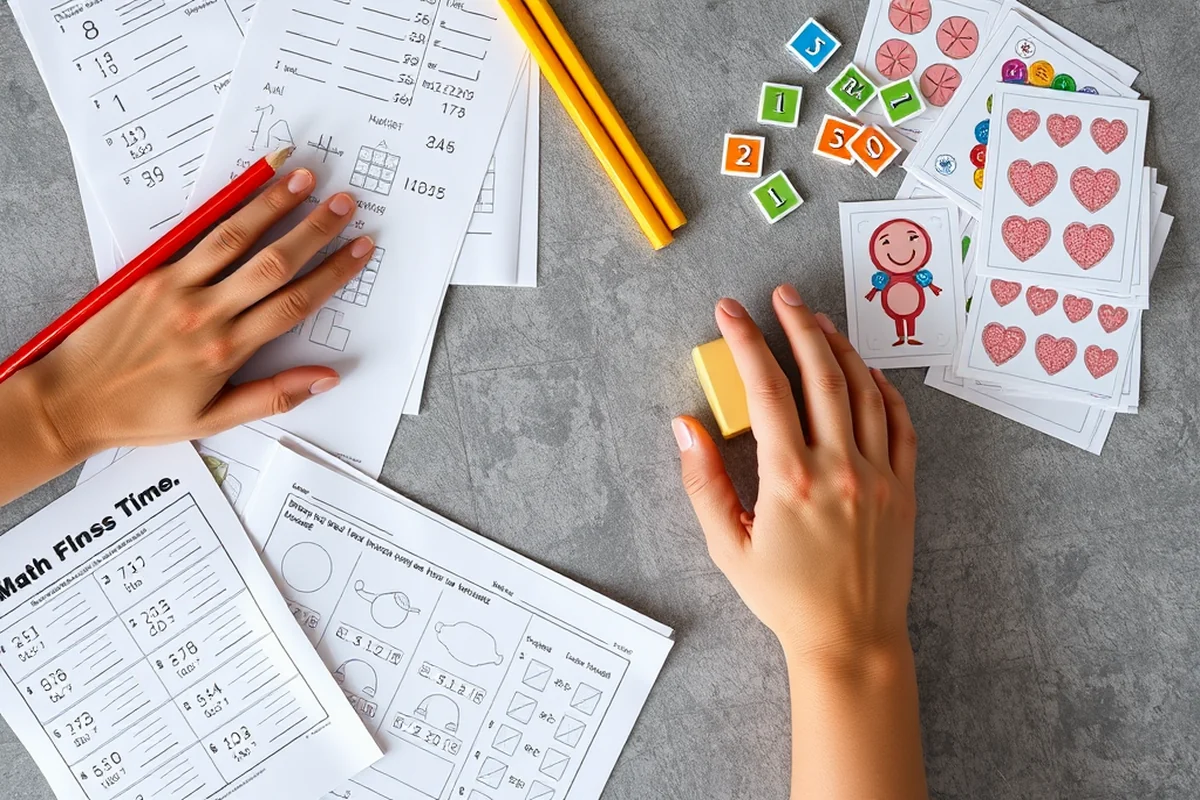
Interactivity is one of the most powerful tools in making math games more effective. When children are actively involved in the game, they are more likely to absorb and retain the information. One of my favorite ways to add interactivity is by using a whiteboard or chalkboard to write down math problems and let the child solve them by drawing or erasing. This physical engagement helps reinforce the learning process.
Another way to make math games more interactive is by incorporating movement. Games like ‘Math Hopscotch,’ where the child jumps on numbers and solves problems as they move, combine physical activity with learning. Not only does this make math more enjoyable, but it also helps improve focus and attention span.
Including a competitive element can also increase engagement. I’ve noticed that my daughter is more motivated to solve problems when she’s playing against a family member or friend. The friendly competition makes learning feel like a game, and it helps her push herself to improve her math skills.
Related: Affordable early math activities activities games
Tips for Creating Your Own Math Games at Home
Making your own math games is a great way to tailor the learning experience to your child’s needs and interests. All you need is a little creativity and some basic materials like paper, markers, and household items. I’ve made my own number cards, shape puzzles, and math scavenger hunts using items from around the house — and my daughter has loved every single one.
One of the easiest ways to create a math game is by using a deck of cards. You can make a simple addition or subtraction game by having the child draw two cards and add or subtract them. This is a quick and fun way to reinforce basic math skills without any special equipment.
Another option is to create a math scavenger hunt where your child has to find objects around the house that match specific math criteria. For example, they might have to find three items that are round or count how many blue items are in the room. This type of game is not only educational but also a great way to get your child moving and exploring.
Related: Early math activities activities on a budget
How to Encourage a Love for Math Through Play
Encouraging a love for math starts with making it a part of everyday life. When math is integrated into play, meals, and even conversations, it becomes something that children naturally enjoy. I’ve noticed that my daughter is more interested in math when we use it in real-life situations, like counting the number of cookies we’re baking or figuring out how much change we should receive at the store.
Another way to encourage a love for math is by celebrating small achievements. Whether it’s solving a difficult problem or mastering a new concept, acknowledging your child’s progress helps build their confidence and motivation. I’ve started giving my daughter a small reward each time she completes a math game — it doesn’t have to be expensive, just something that shows I’m proud of her efforts.
Finally, it’s important to model a positive attitude toward math. If your child sees that you enjoy math and are excited about learning, they are more likely to develop a similar attitude. I’ve made it a point to talk about math in a fun and positive way, and it’s made a big difference in how my daughter perceives the subject.
When math is fun, it becomes a lifelong passion.
Related: Early math activities activities games for small spaces
Maximizing the Learning Outcomes of Math Games
Setting clear learning goals for each game helps ensure that your child is focusing on the right skills. For example, if the goal is to improve addition skills, choose a game that reinforces that concept specifically. I’ve found that having a clear objective for each session helps my daughter stay focused and makes the learning process more effective.
Providing feedback during and after the game is also crucial. When your child solves a problem correctly, offer praise and encouragement. If they make a mistake, use it as an opportunity to explain where they went wrong and how they can improve. I’ve noticed that my daughter learns faster when I give her immediate and constructive feedback.
Finally, consistency is key to achieving the best results. Even a few minutes of gameplay each day can make a big difference over time. I’ve made it a habit to play a math game with my daughter every evening, and it’s helped her develop strong math skills in a short amount of time.
🧮 Number Bingo for Toddlers
A simplified version of Bingo where children match numbers to pictures or objects, ideal for ages 3-5.
🃏 Math Card Games for Older Kids
Games like 'Math War' or '24' help older kids practice arithmetic and logical thinking, suitable for ages 6-12.[3]
🕵️ No-Prep Math Scavenger Hunt
A quick and easy game that uses household items to find and count objects, perfect for busy parents.
👥 Group Math Challenge
A fun team-based game where children work together to solve math problems, great for family or classroom settings.
🧩 Math Puzzle Extension
An advanced variation of puzzles that incorporate multiplication, division, or fractions for older learners.
| The mistake | Why it happens | The fix |
|---|---|---|
| Making the game too difficult for the child’s skill level. | This can lead to frustration and a loss of interest in math. | Choose games that match your child’s current math abilities and gradually increase the difficulty as they improve. |
| Forcing the child to play the game without their consent. | This can make the child associate math with negative emotions and reduce their willingness to engage. | Introduce the game in a fun and playful way, and let the child choose when they want to play. |
| Not providing enough feedback or encouragement. | This can make the child feel unsupported and discourage them from continuing to play and learn. | Offer positive reinforcement and constructive feedback to help the child feel confident and motivated. |
| Playing the game for too long without taking breaks. | This can lead to burnout and a loss of focus, making the game less effective. |
Cool Math Games For Kids
Common Questions
How can I make math games more engaging for my child?
What are some of the best math games for young children?
Do I need any special equipment to play these games?
Can these games be used in a classroom setting?
References
- The Capitol Encore Academy's AIG program will - Dpi.nc.gov (dpi.nc.gov)
- Cool Math Games Hero Clickers (training.jacksonms.gov)
- Assessing Early Math Skills in Preschoolers by Using Digital Games (files.eric.ed.gov)
Cite this guide
Countlane (2026). Cool Math Games For Kids. https://countlane.com/cool-math-games-for-kids/
Feel free to cite or share this guide.