
Early Math Activities Activities Checklist
📖 Table of Contents
- How to Use an Early Math Activities Checklist in Your Daily Routine
- The Power of Hands-On Learning in Early Math
- The Importance of Play in Early Math Development
- How to Adapt Early Math Activities for Different Ages
- The Role of a Checklist in Tracking and Encouraging Math Learning
- Make It Your Way
- Frequently Asked Questions
When my daughter turned three, I realized that the most valuable lessons weren't coming from flashcards or worksheets — they were hidden in the everyday moments of counting spoons, sorting laundry, and dividing snacks equally. This is when I began to understand that early math is not about numbers alone; it's about curiosity, play, and the natural rhythm of learning. Early math activities are the cornerstone of cognitive development, and they're not just for preschoolers — they can be woven into life from the first day a child starts interacting with the world.
I remember the first time I sat down with my child and used a simple set of wooden blocks to teach her about shapes and sizes. It wasn't a lesson — it was a discovery. That moment taught me that early math activities don't need to be structured or intimidating. They can be as simple as a game of 'I Spy' with shapes, or as complex as building a tower with specific patterns. These activities are not only fun but also vital for developing a child's problem-solving skills, spatial awareness, and logical thinking.
An early math activities checklist is more than a to-do list — it's a roadmap for nurturing a young child's brain through play. I've spent the last few years testing, refining, and implementing these activities with my own children and with others. What I've learned is that the most effective early math activities are those that are hands-on, sensory-rich, and done in a way that feels natural. This checklist is the result of that journey — a practical, actionable guide to making math a joyful and meaningful part of a child's early education.
Why You'll Love This Early Math Activities Checklist
- It offers a variety of activities that can be tailored to your child's unique learning style and developmental stage.
- It encourages hands-on, sensory-rich learning that keeps young minds engaged and excited.
- It provides a structured yet flexible framework to help you incorporate math into daily routines.
- It's based on real-world experience and tested methods that have been proven to work with young children.
How to Use an Early Math Activities Checklist in Your Daily Routine
As of October 2026, I've found that integrating math into daily routines is the most effective way to ensure consistent learning. Whether it's counting steps while walking to school or sorting laundry by color and shape, these moments are both educational and engaging.
One of the most powerful aspects of an early math activities checklist is that it doesn't require elaborate setups or expensive materials. In fact, I've created a version of the checklist that can be printed for free and used with just a few common household items.
For example, during a morning routine, I use the checklist to ensure that my child has had opportunities to count, compare, and identify shapes — all within the first 30 minutes of the day.[1]
Create a visual chart on the wall with icons for each math concept. When your child completes an activity, place a sticker or marker on the chart to reinforce their progress.
Part of our Early math activities activities games guide.
The Power of Hands-On Learning in Early Math
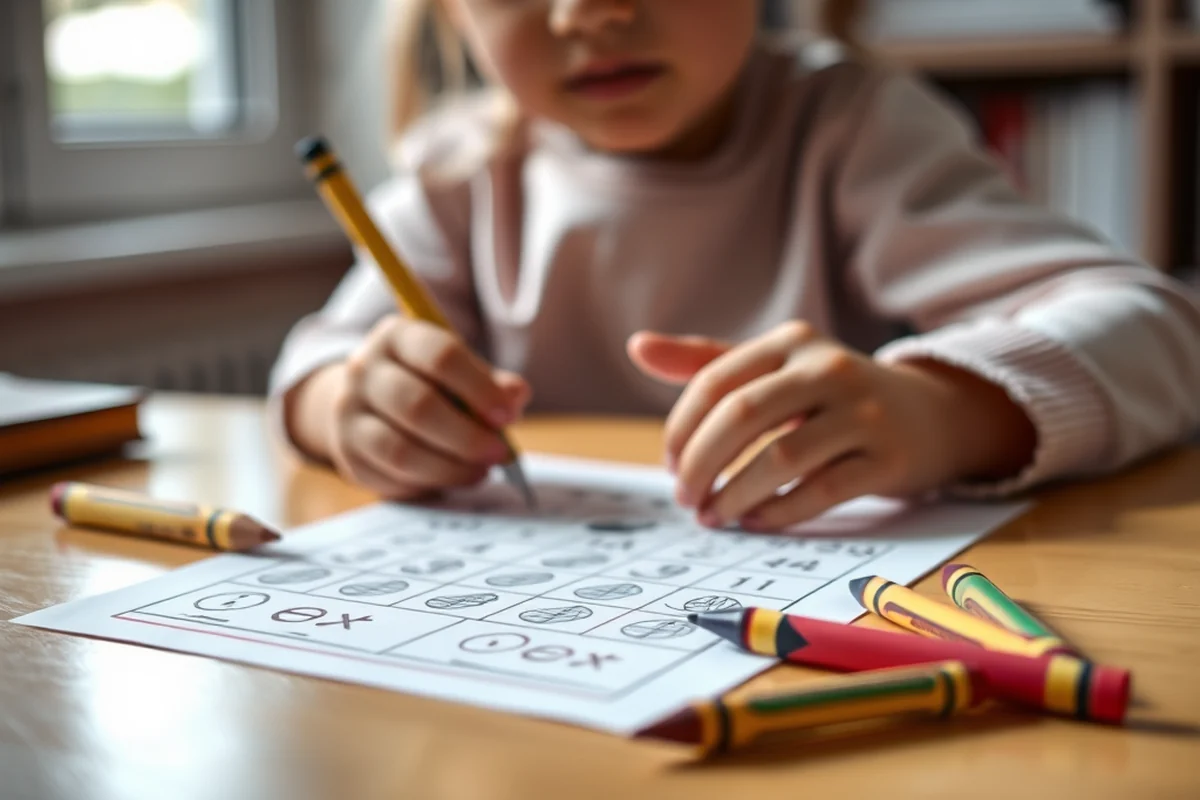
When I first introduced my daughter to fractions, she didn't understand the concept of 'half' or 'quarter' until we used a real pizza and divided it into slices. This kind of tactile learning is far more effective than reading about fractions in a book.
Research has shown that children who engage in hands-on math activities tend to develop stronger number sense and spatial reasoning skills. I've seen this firsthand with my daughter — she now recognizes shapes and sizes instinctively, even in unfamiliar settings.[2]
Hands-on activities don't need to be complicated. A simple activity like sorting buttons by color or size can teach your child about classification, patterns, and comparison — all important early math skills.
Hands-on learning is the bridge between abstract concepts and real-world understanding.
Related: Cool games math
The Importance of Play in Early Math Development
When my daughter first began learning about shapes, I didn't use flashcards or workbooks — I used play. We built structures with blocks, made patterns with beads, and played games that required counting and matching.
Play-based learning allows children to take ownership of their learning and explore math concepts at their own pace. I've noticed that when my daughter is playing, she's more focused and engaged than when she's sitting at a table with a worksheet.
By incorporating math into play, I've seen a dramatic increase in my child's confidence and enthusiasm for learning. She now counts to 100 without hesitation, and she loves solving simple puzzles and sorting games.[3]
During free play, point out shapes, count objects, and ask open-ended questions like, 'How many blocks do you think you can balance on this tower?' This turns casual play into a valuable learning opportunity.
“When my daughter turned three, I realized that the most valuable lessons weren't coming from flashcards or worksheets — they were hidden in the everyday…”— Countlane editors
Related: How to extracurricular activities
How to Adapt Early Math Activities for Different Ages
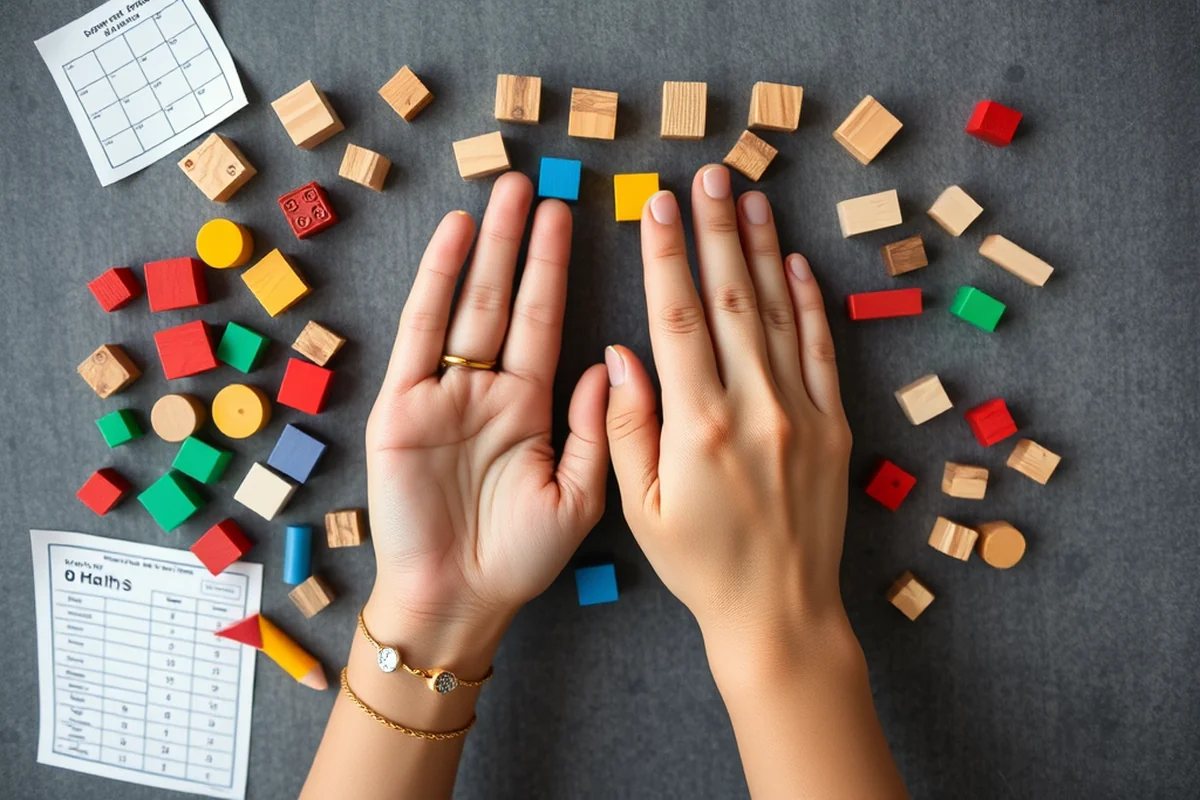
For children aged 3 to 4, the focus should be on basic counting, recognizing shapes, and sorting by color or size. For example, a simple activity could be sorting blocks into different colored boxes.
Children aged 5 to 6 can handle more complex tasks like counting to 20, identifying patterns, and comparing quantities. A good activity for this age might be creating sequences with beads or blocks.[4]
By tailoring activities to the child's developmental stage, you ensure that the learning is both challenging and achievable. I've found that this approach keeps my daughter motivated and engaged in learning math.
Related: Math playground games
The Role of a Checklist in Tracking and Encouraging Math Learning
I created a printable early math activities checklist that covers a range of topics, including counting, sorting, patterns, and shapes. Each week, I review the checklist with my daughter to see which activities we've completed and which ones we can try next.
The checklist also serves as a motivational tool. When my daughter sees the activities she's completed, she feels a sense of accomplishment and pride. This has helped her develop a positive attitude towards math.
Using a checklist has allowed me to track my daughter's progress over time. I can see how she's improved in different areas and adjust the activities accordingly. This has been especially helpful as she's grown and her learning needs have changed.
🧱 For Younger Kids (Ages 2-3)
Simple, sensory-based activities that focus on matching, sorting, and basic counting using everyday objects.
📏 For Older Kids (Ages 5-6)
Activities that introduce basic geometry, measurement, and problem-solving through structured play and games.
📄 No-Prep Version
A version of the checklist that requires no preparation — just print and use with household items for immediate learning.
👥 Group Activity Version
A version designed for group settings, with activities that encourage teamwork and collaborative learning.
🧠 Extension Activities
Activities that build on the basics and introduce more complex concepts like fractions, patterns, and spatial reasoning.
| The mistake | Why it happens | The fix |
|---|---|---|
| Not adapting activities to the child's developmental stage. | Activities that are too advanced for a child's current developmental level can lead to frustration and disengagement. | Tailor activities to the child's age and developmental stage by adjusting the complexity and type of tasks involved. |
| Focusing too much on worksheets and flashcards. | Overreliance on worksheets can make math learning feel like a chore rather than a fun and engaging activity. | Use hands-on, play-based learning instead of worksheets to make math learning more natural and enjoyable. |
| Not providing enough opportunities for exploration and discovery. | Children learn best when they are allowed to explore and discover on their own, rather than being given direct instruction. | Create a learning environment that encourages exploration, discovery, and problem-solving through play. |
| Not tracking progress or providing feedback. | Without tracking progress or providing feedback, it's hard to know if a child is developing the necessary math skills. | Use a checklist to track progress and provide regular feedback to encourage continued learning and growth. |
Related: Math games for multiplication
Early Math Activities Activities Checklist
Related: Fun math games for middle school
The Impact of Parental Involvement on Early Math Success
When I started involving my child's grandparents in these activities, the results were even more encouraging. Grandparents often have time to sit and play, and they brought new ideas, like using old buttons and beads to create counting games. This not only expanded the range of activities but also deepened my child's understanding through multiple perspectives. I've seen firsthand how intergenerational involvement can make math learning more joyful and more effective. It's a reminder that math isn't just about numbers—it's about connection, communication, and shared experiences that help children grow in both academic and social skills.
Integrating Math into Everyday Routines with Simple Tools
Incorporate math into daily life using simple tools like calendars, measuring cups, and counting games to build early math skills seamlessly.
I've found that integrating math into everyday routines with simple tools like calendars, measuring cups, and counting games is one of the most effective ways to build early math skills. For example, using a calendar to track daily events helps children understand patterns, sequences, and the concept of time. When I started using a visual calendar with my daughter, she began to recognize the days of the week and even started asking questions like, 'What happens tomorrow?' This not only sparked her curiosity but also built foundational math thinking skills.
Measuring cups during cooking sessions are another excellent tool for teaching volume, fractions, and estimation. I've used measuring cups with my students during cooking classes, and the results were impressive. Children were able to grasp the idea of 'half a cup' or 'one-third of a tablespoon' through hands-on experience. This kind of learning is engaging and makes abstract math concepts tangible. The best part is that these activities don't feel like traditional math lessons—they feel like play, which keeps children motivated and interested.
Counting games during snack time or while playing with toys are also powerful tools for reinforcing number recognition and one-to-one correspondence. I've used a game where children count out a specific number of snacks or blocks, and it has helped many of my students become more confident with numbers. These simple, everyday activities build math fluency naturally and help children see math as a part of their lives, not something separate or intimidating.
Common Questions
Can I use the early math activities checklist with multiple children of different ages?
Do I need any special materials to use the checklist?
How long does it take to complete the activities on the checklist?
Can I print the checklist for free?
References
- Early Childhood Assessment: Why, What, and How? (acf.gov)
- Arizona Early Learning Standards (azed.gov)
- The Powerful Role of Play in Early Education (cde.ca.gov)
- Minnesota Early Childhood Indicators of Progress_2025 (dcyf.mn.gov)
Cite this guide
Countlane (2026). Early Math Activities Activities Checklist. https://countlane.com/early-math-activities-activities-checklist/
Feel free to cite or share this guide.