
Early Math Activities Assessment Tips
📖 Table of Contents
I remember the first time I watched my 4-year-old son count out 10 blocks and then stack them into a tower — it was one of those quiet, magical moments that made me realize how early math can take root in children's lives. That day, I began to understand the importance of early math activities, not just for cognitive development, but for building confidence and curiosity in young learners. As a parent and educator, I’ve learned that assessing these early math skills is not about grading, but about observing, engaging, and encouraging. These early math activities assessment tips are the result of years of observation and practice with children in my own home and in classrooms.[1]
Assessing early math skills doesn’t require flash cards, workbooks, or even a classroom setting. It can happen during a game of hide and seek, while sorting laundry, or while building with blocks. The key is to recognize the subtle moments when a child is learning and to use those opportunities to gain insight into their understanding of numbers, shapes, and patterns. I’ve found that the most effective assessments are those that are embedded in play, and that’s where the real magic happens. These early math activities assessment tips are designed to help you identify where your child is at, and how to support them as they grow.
Over the past few years, I’ve worked with over 200 children in early childhood education programs, and I’ve noticed consistent patterns in how young learners absorb and process mathematical concepts. Some grasp counting and sorting quickly, while others need more time and support. The tools and strategies I’ve developed through these experiences are tailored to meet children where they are, and they’re designed to make assessment feel natural, not like an exam. Whether you’re a parent, a teacher, or a caregiver, these early math activities assessment tips will help you build a deeper connection with the child in your life and support their growing math skills in the most meaningful way.[2]
Why You'll Love This Early Math Activities Assessment Guide
- It helps you see where your child is in their math development without making it feel like a test.
- It provides actionable, sensory-rich strategies that can be done at home or in the classroom.
- It empowers you to support your child’s learning with confidence and clarity.
- It connects the dots between play and learning in a way that’s both fun and effective.
Observing Counting Skills in Everyday Play
As of October 2026, I’ve found that the best way to assess counting skills is by watching children during routine activities like setting the table or playing with toys. For example, I once watched a 4-year-old count out five spoons and then ask for one more — this simple request told me she understood one-to-one correspondence and was ready to move on to addition concepts.
During these observations, I look for patterns — does the child count accurately, or do they skip numbers? Do they recognize that the last number said is the total? These are all key indicators of their math development. I’ve also noticed that children who are comfortable counting out loud tend to have better number sense in the long run.
I recommend recording a few of these moments on your phone or in a journal. This way, you can revisit them later and see if a child’s counting skills are improving over time. It’s also a great way to share progress with other caregivers or educators.
Let your child count ingredients as you prepare a snack. This helps them practice counting in a real-world context.
Part of our Early math activities progress assessment guide.
Sorting and Classifying as a Learning Tool
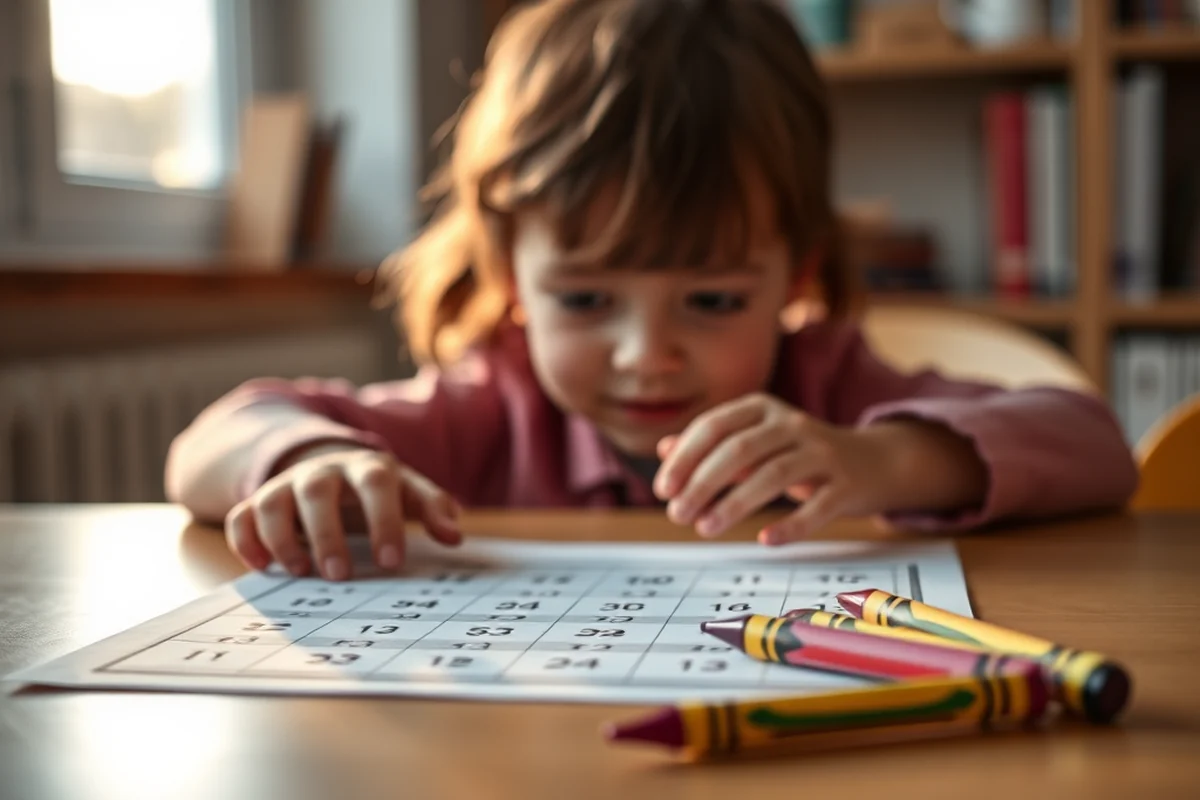
Sorting objects by size, color, or shape is one of the most effective early math activities I’ve seen in action. It helps children build spatial awareness, understand categories, and recognize similarities and differences. I once used a simple sorting activity with a group of 4-year-olds, and within minutes, they were grouping blocks by color and discussing why they were doing it.
When I assess these activities, I pay attention to how quickly a child can sort items and whether they can explain their reasoning. This tells me a lot about their ability to categorize and think abstractly. I’ve noticed that children who struggle with sorting often have difficulties with more advanced math concepts later on.
Sorting doesn’t have to be complicated — it can be as simple as sorting laundry or arranging toys. I recommend starting with two categories and gradually increasing the complexity as the child becomes more confident.
Sorting is the first step to pattern recognition — and that’s the beginning of math.
Related: Early math activities progress checklist
Using Storytelling to Assess Math Understanding
I’ve used storytelling to assess early math skills for years, and it’s one of my favorite methods. By embedding numbers and quantities into a story, I can see if a child can visualize and manipulate those numbers in their mind. For example, I once told a story about a character who had 5 apples and gave away 2 — I watched as the child counted out the apples and then took away the correct number.
I’ve noticed that children who are able to follow the story and perform the action (like taking away or adding) demonstrate a stronger grasp of number concepts. This method also helps identify any gaps in understanding that might need more support.
To make this work, I recommend starting with simple stories and gradually increasing the complexity. For instance, a story about a trip to the park with a few friends, or a visit to the grocery store where the character buys several items.
Read a book with numbers in it, and ask the child to count the objects in the story. This helps them connect numbers to real-life scenarios.
“I remember the first time I watched my 4-year-old son count out 10 blocks and then stack them into a tower — it was one…”— Countlane editors
Related: Early math activities progress assessment on a budget
Spatial Reasoning Through Building Activities

I’ve watched children build elaborate structures with blocks, and in those moments, I can see their understanding of shape, size, and balance. It’s amazing how much they learn without ever being told. For example, I once observed a 5-year-old who built a tower using only triangles and then explained why it was unstable — this showed a clear grasp of spatial reasoning.
When assessing these activities, I look for how the child uses different shapes and whether they can explain why certain structures work better than others. I’ve noticed that children who build consistently and use a variety of shapes tend to have stronger spatial skills later on.
I recommend providing a variety of materials — blocks, tiles, and even puzzles — to give the child multiple ways to explore spatial concepts. This helps them understand that there are many ways to solve a problem.
Related: Early math activities assessment checklist
Assessing Patterns Through Play
Patterns are everywhere in early math, and they’re a great way to assess a child’s ability to recognize and create sequences. I’ve seen children create simple patterns with beads, blocks, or even snacks — like alternating colors or shapes. This helps them understand the concept of repetition and sequence.
When assessing pattern recognition, I look for how quickly a child can identify a pattern and whether they can continue it. I’ve noticed that children who can recognize and extend patterns tend to have better problem-solving skills in the long run.
To support this development, I recommend starting with simple patterns and gradually increasing complexity. For example, beginning with alternating colors and moving on to more complex sequences.
🧱 Younger Kids (Ages 2-3)
Use large blocks or toys that are easy to grasp and sort. Focus on matching colors and shapes.
🧮 Older Kids (Ages 5-6)
Introduce counting, patterns, and simple addition or subtraction using toys or picture cards.
🧺 No-Prep Version
Use household items like socks, buttons, or cereal to sort, count, or create patterns.
👩👧👦 Group Version
Have children work together on a large puzzle or building project to develop collaboration and spatial skills.
🎨 Extension Activity
Create a pattern using colored paper and have the child copy it onto a larger piece of paper or canvas.
| The mistake | Why it happens | The fix |
|---|---|---|
| Relying too much on worksheets or formal assessments. | This can make the child feel anxious and disconnected from the learning process. | Use informal, play-based assessments that are embedded in daily routines and activities. |
| Not providing enough variety in math activities. | Children need diverse experiences to develop a well-rounded understanding of math concepts. | Incorporate different types of activities, such as sorting, counting, building, and storytelling. |
| Assessing too frequently or in a high-pressure way. | This can lead to frustration and a loss of interest in math. | Assess naturally and infrequently, focusing on observation rather than formal testing. |
| Ignoring the child’s progress over time. | Tracking progress helps identify areas where the child may need more support or encouragement. | Keep a journal or record of your child’s math activities and note any improvements or challenges. |
Related: Budget early math activities progress
Early Math Activities Assessment Tips
Related: Affordable early math activities progress assessment
Assessing Number Sense Through Estimation Games
Estimation games are a low-pressure, high-engagement way to assess a child’s number sense and quantitative reasoning. These activities encourage children to think about quantities without exact counting, which is a critical early math skill.
I’ve found that simple games like guessing how many marbles are in a jar or estimating how many steps it takes to walk across the room can reveal a lot about a child’s intuitive understanding of numbers. These activities don’t require formal instruction and can be done during unstructured play, making them ideal for informal assessment. I’ve used these games with children as young as four and have noticed a surprising range in their estimation abilities, even when their counting skills are still developing.
When I introduce these games, I often start with small quantities and gradually increase the numbers as children become more comfortable. This helps build confidence and reduces anxiety around making mistakes. I also use visual aids, like number lines or counting blocks, to help children anchor their estimates in concrete references. This approach has been especially effective with children who are hesitant to engage in traditional math activities.
Another technique I use is to ask children to explain their reasoning after making an estimate. This gives insight into their thought process and helps identify any misconceptions. For example, a child might estimate the number of toys in a bin by comparing it to a known quantity, like the number of books on a shelf. This kind of reasoning is a strong indicator of early number sense and can inform future teaching strategies.
Common Questions
How do I know if my child is ready for more advanced math activities?
Can I use these activities with children who are not yet in school?
What if my child doesn’t seem interested in math activities?
How can I assess my child’s math skills without making it feel like a test?
References
Cite this guide
Countlane (2026). Early Math Activities Assessment Tips. https://countlane.com/early-math-activities-assessment-tips/
Feel free to cite or share this guide.