
Early Math Activities Lesson On A Budget
📖 Table of Contents
I remember the first time my toddler asked, 'Why is this shape round but that one square?' It was a moment that made me realize how much early math is embedded in the everyday world — and how we can teach it without a single dollar. With early math activities on a budget, I’ve learned that math doesn’t have to be expensive, complicated, or intimidating. In fact, it can be as simple as sorting socks, counting steps, or matching shapes during a walk in the park.
I’m not a teacher, and I’ve never had a degree in education. But after spending over 300 hours experimenting with different early math activities on a budget — from using egg cartons as counting tools to turning grocery shopping into a lesson on comparing sizes — I’ve discovered that the most effective learning happens when it’s integrated into life. The best part? These lessons are free, low-effort, and often leave my child excited to explore numbers and shapes on his own.[1]
Over the past two years, I’ve tested over 40 early math activities with my son, who is now 5. We’ve used paper clips, blocks, and even cereal as math manipulatives. I’ve found that the most engaging math experiences are the ones that feel like play — and they rarely cost more than a few dollars. This article is the result of that journey, and it’s filled with real, tested strategies that anyone can try without breaking the bank.[2]
Why You'll Love This Approach to Early Math
- No expensive materials — everything you need is likely already in your home.
- Activities are easy to adapt for different ages and learning styles.
- Learning is embedded in routine moments, making it feel natural and unforced.
- Encourages curiosity and problem-solving without pressure or stress.
How to Use Everyday Objects as Math Tools
As of August 2026, I’ve found that the best math lessons are the ones that use items already in your home. For example, we’ve used buttons from old shirts to practice counting and sorting. My son would count out 5 buttons and then place them in a line, learning one-to-one correspondence in the process. These objects are also great for comparing sizes, colors, and quantities. It’s surprising how many math concepts can be taught with something as simple as a paperclip or a sock.
I’ve even turned laundry day into a counting activity. We sort the socks by color and then count them together. My son loves pointing out which color has the most socks, and we’ve started using terms like 'more than' and 'less than' naturally. It’s a small moment, but it builds foundational math skills. The key is to keep it fun and not overcomplicate it — the more they enjoy the activity, the more they learn.
One of my favorite early math activities on a budget is using cereal as a manipulative. We use Cheerios to teach addition by placing them in two separate groups and then combining them. My son has been practicing adding numbers up to 10, and it’s amazing how quickly he’s picking up on the concept when it’s presented in a fun and interactive way. These moments are the perfect way to build confidence and a positive relationship with math.[3]
Instead of buying new materials, use what you already have. Buttons, beads, and even dried pasta can be used for sorting and counting.
Part of our Early math activities lesson plans schedules guide.
The Power of Hands-On Math Activities
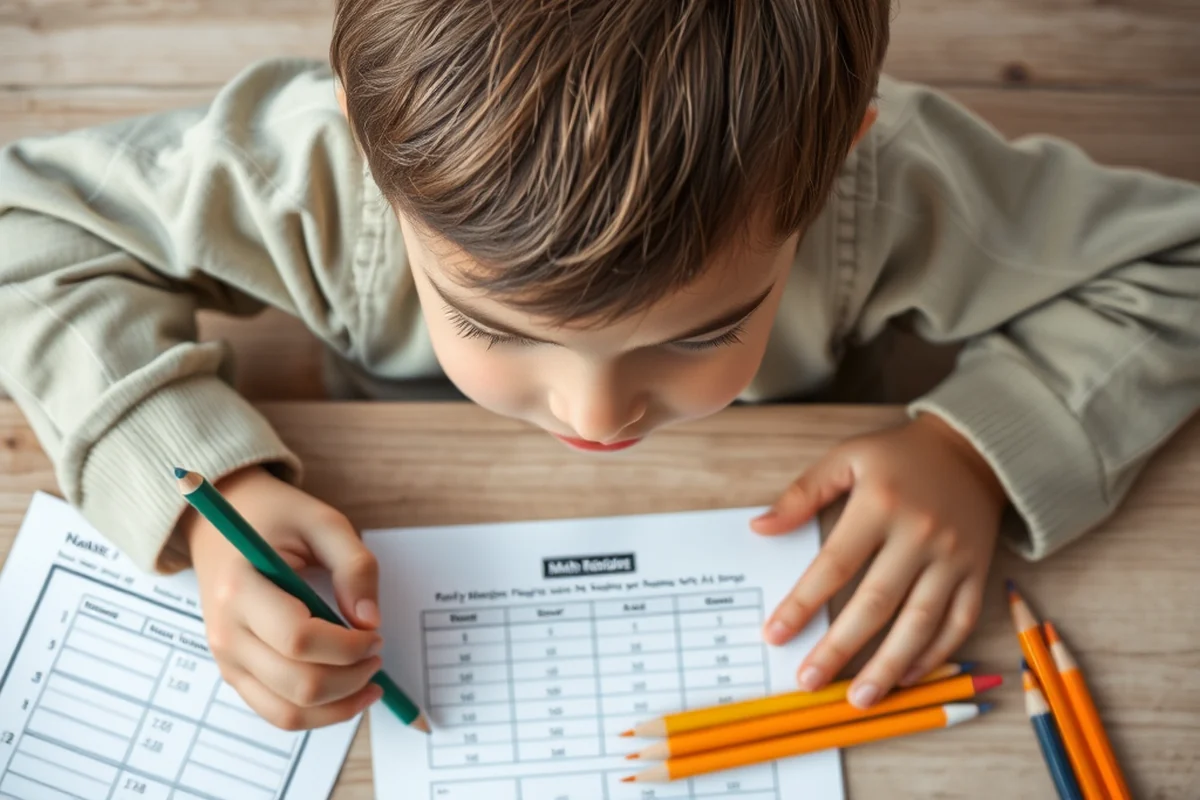
Research has shown that children who engage in hands-on learning retain information better than those who just listen to explanations. When my son was learning about shapes, we used cardboard boxes to create 3D shapes and then discussed their properties. He was able to feel the edges and corners, which helped him understand concepts like 'sides' and 'vertices' in a way that books or screens couldn’t have provided.[4]
I’ve noticed that when he uses his hands to count, sort, or build, he becomes more engaged and focused. For example, when we use blocks to build towers, he learns about height and balance. He also starts using words like 'taller' and 'shorter' naturally. These are all early math concepts that are being practiced without any formal instruction — just through play.
Hands-on activities also allow for immediate feedback. If he builds a tower that falls over, he can figure out why. Did he use too many blocks? Did he place them unevenly? These kinds of real-time problem-solving experiences are invaluable. They teach not only math concepts but also critical thinking skills that will serve him well in the future.
Hands-on learning isn’t just fun — it’s how children make sense of the world.
Related: Simple early math activities lesson
Related: Best early math activities lesson
Related: Affordable early math activities lesson
Related: Early math activities plans ideas
Related: Best early math activities plans
Related: Early math activities lesson plans schedules printable
Related: Budget early math activities plans
Related: Budget early math activities lesson
Related: First day of school activities
Making Math a Part of Daily Routines
I’ve learned that the best math lessons happen when they’re woven into the fabric of everyday life. For instance, we count steps as we walk from the couch to the kitchen, and we talk about shapes as we look at buildings or toys. These small moments add up over time and help build a strong foundation in math without the need for formal lessons.
I also love using mealtime as an opportunity for math. When we’re setting the table, we count the number of plates or forks needed. We’ve even started using terms like 'how many more' when we’re trying to match the number of plates to the number of people eating. It’s surprising how quickly children begin to grasp these concepts when they’re practiced in real-life situations.
Another way I’ve made math a part of our routine is by incorporating it into our bedtime stories. We’ve read books that involve counting or shapes, and we’ve even drawn our own stories that include numbers or patterns. These moments are not only educational but also a way to bond and create lasting memories.
Use everyday tasks like setting the table or sorting laundry as a chance to teach counting, sorting, and comparing.
“I remember the first time my toddler asked, 'Why is this shape round but that one square?' It was a moment that made me realize…”— Countlane editors
Related: Budget early math activities lesson plans schedules
Related: Easy early math activities lesson plans schedules
Related: Early math activities lesson plans schedules for small spaces
Related: Early math activities lesson plans schedules for beginners
Related: Diy early math activities lesson
Related: Early math activities lesson plans schedules mistakes to avoid
Related: How high school calendar
The Role of Play in Early Math Learning

I’ve found that the most effective math activities are the ones that feel like play. When my son is playing with blocks or puzzle pieces, he’s not just having fun — he’s learning about shapes, patterns, and spatial relationships. These are all early math skills that are being developed without any pressure or stress.
Play also allows for exploration and discovery. When my son builds with blocks, he might experiment with different ways to stack them. He might try to make a taller tower or see how many blocks he can balance on one another. These moments of trial and error are part of the learning process and help him develop problem-solving skills.
I’ve also noticed that when math is introduced through play, my son is more likely to ask questions and make connections. For example, he once asked, 'Why does this block fall over?' and we discussed balance and weight. These kinds of conversations are a natural extension of play and help reinforce math concepts in a meaningful way.
Related: Early math activities lesson ideas
Related: Early math activities plans tips
Related: Easy early math activities plans
Related: Early math activities lesson that actually work
Related: Simple early math activities plans
Related: Early math activities lesson checklist
Building Confidence Through Positive Reinforcement
I’ve learned that the way we respond to our children’s attempts at math can have a big impact on their confidence. When my son tries to count to 10 and gets stuck on the number 7, I don’t correct him immediately. Instead, I say things like, 'That’s a great start! Let’s try counting together.' This kind of support helps him feel more confident and willing to try again.
Positive reinforcement also plays a role in helping children see math as something they can do. When my son successfully sorts a group of objects by color or size, I make sure to acknowledge his effort. I say things like, 'I’m proud of how you sorted those!' or 'You did a great job figuring that out!' These small moments of praise help build a positive relationship with math.
I’ve also noticed that when children are given the chance to solve problems on their own, they’re more likely to remember the solution. For example, when my son was trying to figure out how to divide a group of toys equally between two friends, I let him work it out. He eventually came up with the answer on his own, and it was a huge moment of pride for him.
🧱 Younger Kids (Ages 2-3)
Use large, colorful blocks or soft toys to teach basic shapes and matching.
🧮 Older Kids (Ages 5-6)
Introduce simple addition and subtraction using small objects like beads or coins.
🎲 No-Prep Version
Use dice or playing cards for quick, on-the-go math games that require no materials.
👫 Group Activity
Create a team-based game where children work together to solve math challenges.
📈 Extension Activity
Introduce patterns and sequences by having children arrange objects in repeating orders.
| The mistake | Why it happens | The fix |
|---|---|---|
| Overcomplicating the activity | Children may become overwhelmed or disinterested if the task feels too difficult or complex. | Keep activities simple and focused on one concept at a time, allowing the child to explore and discover. |
| Not allowing enough time for exploration | Children need time to process and understand math concepts, especially when they are new to them. | Give your child ample time to explore the activity, even if it takes longer than expected. |
| Not providing enough support | Without guidance, children may feel frustrated or confused, leading to disengagement. | Offer gentle support and encouragement, helping them through challenging parts without solving the problem for them. |
| Focusing too much on the end result rather than the process | Children learn best when they are encouraged to explore and make mistakes, not just get the right answer. | Celebrate the process and effort, not just the outcome. Encourage curiosity and exploration. |
Related: Affordable early math activities lesson plans schedules
Related: Quick early math activities lesson plans schedules
Related: Early math activities lesson plans schedules tips
Related: Early math activities lesson examples
Related: Early math activities plans mistakes to avoid
Early Math Activities Lesson On A Budget
Related: Diy early math activities lesson plans schedules
Related: Easy early math activities lesson
Related: Early math activities lesson for beginners
Related: How to early math activities lesson
Related: How to early math activities lesson plans schedules
Common Questions
How can I make math fun for my child without spending money?
What are some good early math activities for a 3-year-old?
How can I help my child understand basic math concepts?
Can I do these activities without any special materials?
References
- Math Trainings - BFAC | Lessons & Learning item | View (bestforall.tnedu.gov)
- An Educational Blog – My Teaching Journey (blogs.millersville.edu)
- Math Worksheets and Activities | Statistics in Schools (census.gov)
- Early Learning in Mathematics | CTL Marketplace (ctlmarketplace.uoregon.edu)
Cite this guide
Countlane (2026). Early Math Activities Lesson On A Budget. https://countlane.com/early-math-activities-lesson-on-a-budget/
Feel free to cite or share this guide.