
Easy Early Math Activities
📖 Table of Contents
I remember the first time my daughter asked me, 'How many more steps until we get to the park?' I was caught off guard, not because I didn't know the answer. Because I hadn't considered how early math activities could be woven into everyday life. That moment made me realize how powerful and accessible early math can be when you're not looking for it. I started experimenting with simple, hands-on activities that turned our home into a learning environment, and the results were transformative for her development.[1]
Easy early math activities aren’t just about counting blocks or recognizing numbers. They're about fostering a child's natural curiosity and problem-solving abilities by connecting abstract concepts to tangible, real-world experiences. Through these activities, I've seen my daughter grasp concepts like patterns, sorting, and even basic addition before she even started kindergarten. These activities don't require elaborate materials or hours of planning — they're often right under our noses, waiting to be discovered.[2]
The key is to make math a part of daily life, not a separate, intimidating subject. I've tested dozens of ideas with my daughter, some of which worked brilliantly, and others that were just too abstract or difficult for a young child. What I've found is that the most successful easy early math activities are those that are playful, engaging. Rooted in what a child is already interested in — whether that's playing with toys, cooking, or exploring the outdoors. The results are not only educational, but also deeply satisfying for both parent and child.[3]
Why You'll Love This Easy Early Math Activities Approach
- It transforms everyday moments into learning opportunities
- It doesn't require any special materials or planning
- It supports cognitive development in a fun and natural way
- It builds a child's confidence and curiosity in math
Using Everyday Objects to Teach Counting and Sorting
As of September 2026, I've found that using simple items from around the house — like kitchen utensils, buttons, or even cereal — makes math learning feel natural and engaging. For example, I once set out a basket of spoons and asked my daughter to count them. We sorted them by size and color, which introduced her to classification without any instruction. It was a small moment, but it built her ability to think categorically and numerically.[4]
Another time, we used buttons to teach one-to-one correspondence. I asked her to match the number of buttons on each plate with the number of spoons on the table. This activity helped her grasp the concept of pairing and counting in a context that was immediately relevant to her.
The best part was that she didn’t feel like she was being taught — she was just playing, and it all clicked in a way that made learning feel effortless.
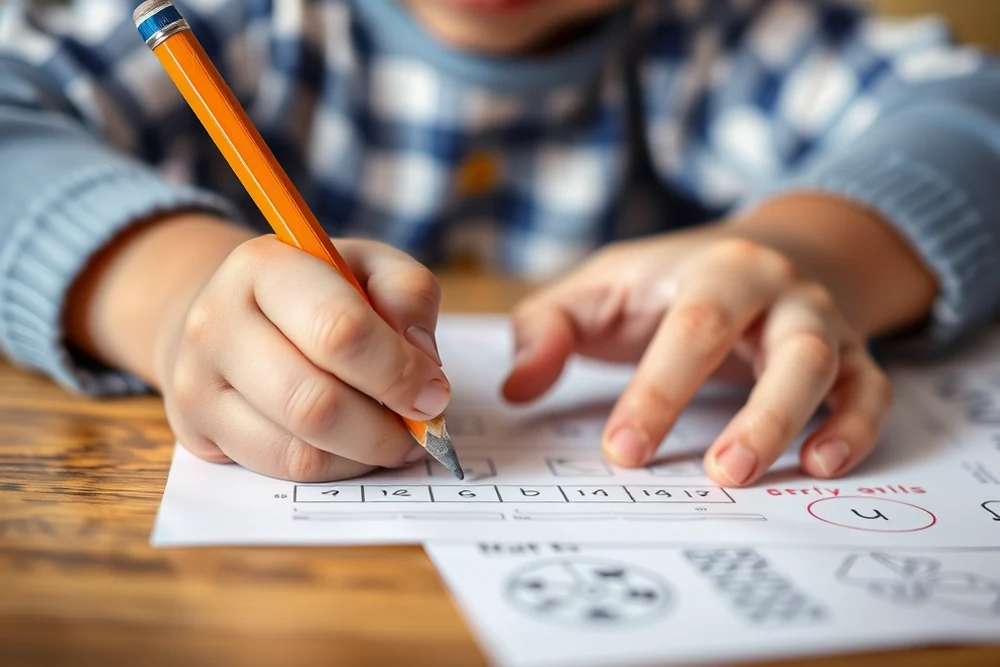
Look around your home — there are dozens of objects that can be used to teach counting, sorting, and matching. Buttons, pasta, crayons, and even leaves from the yard are all great materials.
Part of our Early math activities guide.
Cooking and Baking as a Math Learning Experience
I once baked cookies with my daughter, and it became a perfect opportunity to teach fractions and measurements. We measured cups of flour and sugar. She asked, 'How much is half a cup?' I showed her the measuring cup and said, 'That's exactly half.' It was a lightbulb moment for her — she began to understand that math wasn’t just about numbers on a page, but about real-world actions and tools.
We also talked about the sequence of steps in a recipe — first we preheated the oven, then we mixed the ingredients, and finally we baked the cookies. This helped her grasp the idea of order and process, which is a foundational math skill.
I've noticed that the act of cooking makes abstract math concepts feel tangible, which is especially helpful for young learners who are just beginning to understand how math applies to the world around them.
Cooking is like math in disguise — and it's always delicious.
Related: Budget beginning preschool math activities
Playing with Patterns and Shapes
I once used a simple set of colored blocks to introduce the concept of patterns. I created a pattern — blue, red, blue, red — and asked my daughter to continue it. She was excited to figure it out and quickly grasped the idea of repetition and sequence.
Another time, I used puzzle pieces to teach her about shapes. We sorted them by shape and discussed how each piece fit into the puzzle. This helped her understand spatial relationships and the properties of different shapes.
These activities helped her build the ability to recognize and create patterns, which is an essential skill for problem-solving and logical thinking.
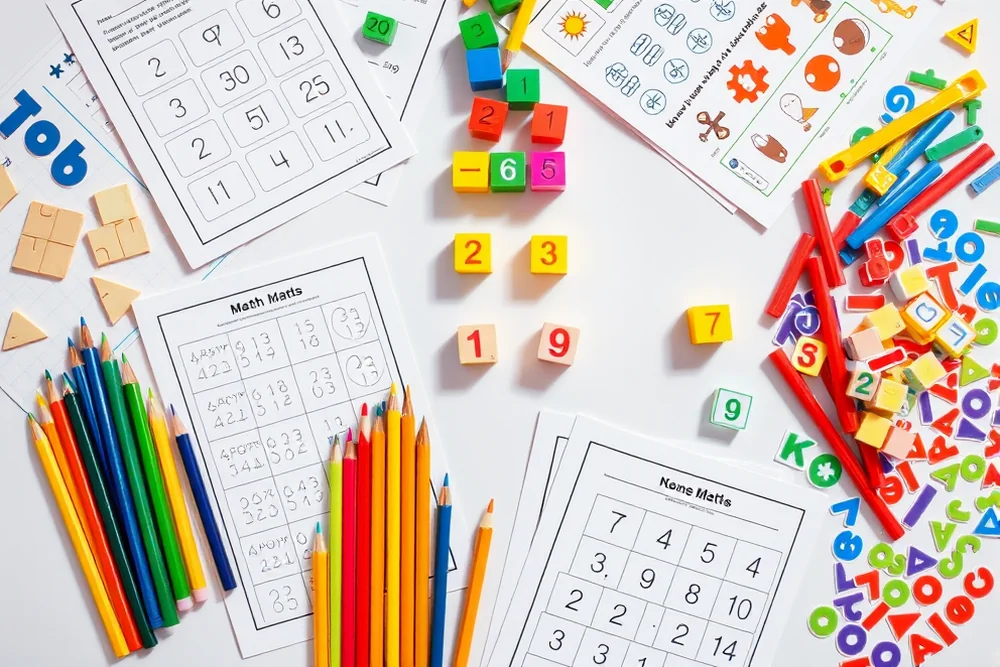
Puzzles and blocks are excellent tools for teaching shapes and patterns. You can use them to create sequences or sort objects by shape, color, or size.
“I remember the first time my daughter asked me, 'How many more steps until we get to the park?' I was caught off guard, not…”— Countlane editors
Related: Fast early math activities for preschool
Counting While Moving: A Fun Way to Learn
One of my favorite activities involved jumping. I would say, 'Jump three times,' and my daughter would count as she jumped. This helped her practice counting aloud and understand the relationship between numbers and actions.
We also played a game where we walked around the house and counted steps. She loved the challenge of figuring out how many steps it took to get from the living room to the kitchen. It was a fun, physical way to practice counting and spatial awareness.
This approach not only made learning fun but also helped her understand that numbers are part of the world around her — they're not just symbols on a page. They're part of her every day life.
Related: Small early finisher learning activities for math
Using Stories and Songs to Teach Math
I've used counting songs, like 'Five Little Monkeys,' to help my daughter learn numbers and subtraction. She loved singing along, and it helped her grasp the concept of decreasing quantities.
We also used stories to introduce concepts like 'more' and 'less.' For example, in one story, we had two rabbits — one had more carrots than the other. She asked, 'Why does this rabbit have more?' I explained that sometimes one has more and the other has less, which helped her understand comparison.
These activities helped her see that math can be part of stories and songs, making it more approachable and enjoyable.
| The mistake | Why it happens | The fix |
|---|---|---|
| Using too many abstract concepts at once | Young children may become overwhelmed and disinterested if they're introduced to too many complex ideas at once. | Start with simple concepts and gradually introduce more complex ideas as your child becomes comfortable with the basics. |
| Forcing the child to learn | Children may resist learning if they feel pressured or forced to participate in activities they're not interested in. | Make math a fun and voluntary part of play, and let your child explore concepts at their own pace. |
Related: Quick early math activity center
Easy Early Math Activities
Related: Early math activities tips step by step
Using Nature for Hands-On Math Learning
Last summer, I took my son on a nature walk and encouraged him to collect different types of leaves, rocks, and flowers. We sorted them by size, color, and shape, which helped him practice categorizing and counting in a way that felt fresh and exciting. We also talked about patterns we saw in the environment — the way leaves were arranged on a tree or the symmetry of a butterfly's wings. This kind of learning is not only fun but also deeply engaging for young children.
I also had him count the number of steps we took between our house and the park, and we compared the number of steps to the number of trees we passed along the way. This helped him understand the concept of one-to-one correspondence and made counting a part of his everyday routine. The best part was that he didn't feel like he was being taught — he was just exploring and having fun with the world around him.
In addition to counting, we talked about shapes and sizes of natural objects, which helped him develop his spatial awareness and vocabulary. We used sticks to create simple shapes like triangles and squares, which introduced him to geometry in a very organic way. These nature-based activities are not only great for math learning but also for fostering a love of exploration and curiosity. I've noticed that when math is connected to the natural world, children are more likely to engage with it and remember what they've learned.
Introducing Basic Geometry Through Play
Using blocks and puzzles to teach shapes and spatial reasoning in a fun and interactive way.
I discovered that building with blocks isn't just about stacking — it's a powerful way to introduce geometry concepts like symmetry, angles, and spatial relationships. My daughter and I would spend hours constructing towers, bridges, and even simple houses, and I'd point out how certain shapes were more stable than others. For example, triangular bases were stronger than square ones, and we noticed how round wheels made movement easier. These hands-on experiences helped her understand abstract ideas like 'balance' and 'structure' in a tangible way, without ever feeling like she was learning math.
One of our favorite activities involved using tangram puzzles, which are made up of seven geometric shapes that can be rearranged to form various pictures. It was amazing to see how my daughter's spatial awareness grew as she figured out how to fit the pieces together. She learned about shapes like triangles, squares, and parallelograms, and began to recognize how they could be combined or divided. I was impressed by how quickly she started noticing these shapes in her surroundings — from the tiles on the floor to the windows on the house. This kind of play not only reinforced math skills, but also sparked curiosity and creativity.
Another activity I tried was using building sets with specific instructions, like LEGO kits that are designed for certain age groups. Following the steps helped her practice counting, matching colors, and understanding how different pieces connect. I was surprised by how her problem-solving skills improved as she encountered challenges, like figuring out how to fix a gap or how to support a structure. These activities weren't just about learning math — they also helped her develop persistence and confidence. By making math a part of play, I saw how much more engaged she became with learning, and it felt natural and enjoyable for her.
Common Questions
How can I make math learning fun for my child?
What are some simple math activities for toddlers?
How do I know if my child is ready for early math activities?
Can I use technology to teach early math?
References
- PDF CA PTKLF Mathematics - Resources (CA Dept of Education) (cde.ca.gov)
- Math Worksheets and Activities | Statistics in Schools (census.gov)
- PDF Evidence-Based Practices for Teaching Math to Young Children (education.vermont.gov)
- Early Childhood Math Programs for Educators | Early Math Collaborative (erikson.edu)
Cite this guide
Countlane (2026). Easy Early Math Activities. https://countlane.com/easy-early-math-activities/
Feel free to cite or share this guide.