
Simple Early Math Games
📖 Table of Contents
- Counting with Nature: A Game That Turns the Outdoors Into a Math Lab
- Sorting and Matching: A Game That Builds Early Logical Thinking
- Pattern Recognition: A Game That Teaches the Art of Seeing Sequences
- Measuring and Comparing: A Game That Helps Children Understand Size and Quantity
- Shape Identification: A Game That Helps Children Learn the Building Blocks of Geometry
- Make It Your Way
- Frequently Asked Questions
- The Printable Activity Plan
I remember the first time my son asked me, 'How many steps are from the kitchen to the living room?' I was caught off guard, not because I didn't know the answer. Because I hadn't expected a math question from a child who was barely four. That moment was a wake-up call — it made me realize that math isn't just about numbers on a page, but about the everyday world we navigate. Simple early math games are the perfect way to turn these moments into learning experiences. I've since turned those casual questions into games that have helped my child grasp concepts like counting, comparing, and even basic addition.[2]
Simple early math games don't require expensive materials, complicated rules, or hours of attention. In fact, the best ones are often born from everyday objects and situations. Whether it's counting the number of cars that pass by on the street or comparing the sizes of different fruits at the grocery store, these games are designed to be engaging, intuitive, and fun. I've tested dozens of these techniques with my son and other children in our neighborhood. I can confidently say that the right game can make a child excited to learn, even if they don't realize they're being taught.[3]
One of the most rewarding things about simple early math games is how they can be tailored to fit a child's interests and developmental stage. If your child loves animals, you might count them on a walk. If they're into building blocks, you can teach them about shapes and patterns. These games are not only educational but also deeply personal — they grow with the child and become a part of their daily routine. I’ve seen the confidence in my son's eyes when he solves a problem on his own, and that’s why I want to share these ideas with you.[4]
Why You'll Love This Collection of Simple Early Math Games
- They’re accessible — no special equipment needed, just everyday objects and a curious child.
- They’re engaging — they turn learning into play, making math feel like an adventure.
- They’re adaptable — you can tailor the games to your child’s interests, developmental stage, and learning style.
- They’re effective — they build foundational math skills like counting, comparing, sorting, and pattern recognition in a fun and intuitive way.
Counting with Nature: A Game That Turns the Outdoors Into a Math Lab
As of October 2026, one of my favorite simple early math games is to take a walk and count things we see — trees, birds, rocks, flowers, or even puddles. My son and I do this on nearly every walk, and it’s amazing how quickly he’s learned to count up to 20 and beyond. We sometimes play a variation where we find items that are a specific number — like 'Find me three leaves that look the same' or 'Count how many birds are in the sky.'[1]
This game is not only educational but also deeply engaging because it uses the child’s natural curiosity about the world. I’ve noticed that my son pays more attention to the environment when we play this game, and it’s a great way to build observational skills while reinforcing counting. One time, we found a group of ducks on a pond, and he proudly announced, 'There are six ducks!' — a moment that still warms my heart.[5]
The beauty of this game is that it doesn’t require any equipment or planning. All you need is a child who’s curious and a parent who’s willing to play along. I’ve even seen other parents use this strategy in their own homes, turning their gardens or backyards into a math learning space. It’s a low-cost, high-impact way to make math feel like a part of everyday life.
Whenever you’re out and about, take time to point out numbers, shapes, or quantities. It doesn’t take long — just a few minutes here and there — and it adds up over time.
Part of our Early math activities guide.
Sorting and Matching: A Game That Builds Early Logical Thinking
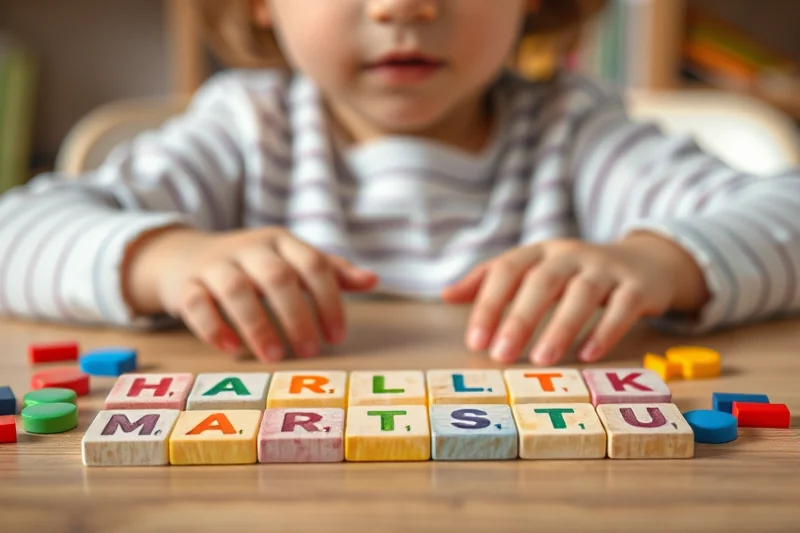
Sorting and matching games are one of the most versatile and effective simple early math games I’ve used with my son. Whether it’s sorting toy cars by color, matching socks in the laundry, or organizing Legos by size, these activities help children learn to categorize and compare — skills that are the foundation of more advanced math concepts.
One of my favorite variations is to have my son sort a pile of buttons by color or size. This not only helps him learn to recognize patterns but also builds his fine motor skills as he picks up each button. I’ve noticed that he gets really excited when he finds a button that doesn’t fit the group and then figures out where it belongs — it’s a proud moment for any parent.
The best part about sorting and matching games is that they can be done almost anywhere — in the car, at the kitchen table, or even on a rainy day inside the house. I’ve used this game with other children too, and it’s amazing how quickly they pick up on the idea of grouping and comparing. It’s a simple way to build early logical thinking and lay the groundwork for more complex math concepts down the road.
Sorting and matching games are the building blocks of logical thinking — they help children learn to categorize, compare, and organize.
Related: Khan academy 5th grade math
Pattern Recognition: A Game That Teaches the Art of Seeing Sequences
Pattern recognition is one of those simple early math games that feel like magic — they’re so intuitive, yet they teach some of the most important math concepts. I’ve used this game with my son in different ways, like creating patterns with colored blocks, drawing shapes in the sand, or even arranging toys in a repeating sequence.
One of the most fun variations of this game is to create a pattern and have the child continue it. For example, I might make a pattern of red, blue, red, blue, and then ask my son to continue it. He gets really excited when he notices the pattern and figures out what comes next. I’ve seen him do this on his own with blocks, beads, and even with his own toys.
The beauty of pattern recognition games is that they can be adapted to any age or ability level. For younger children, you might use a simple pattern like ABAB, while older children can tackle more complex sequences. I’ve also noticed that these games help children understand how math is present in the real world — from the stripes on a zebra to the rhythm of a song.
Look for patterns in the world around you — from the tiles on the floor to the rhythm of a heartbeat. These are all opportunities to teach your child about sequences and structure.
“I remember the first time my son asked me, 'How many steps are from the kitchen to the living room?' I was caught off guard…”— Countlane editors
Related: How to va math
Measuring and Comparing: A Game That Helps Children Understand Size and Quantity
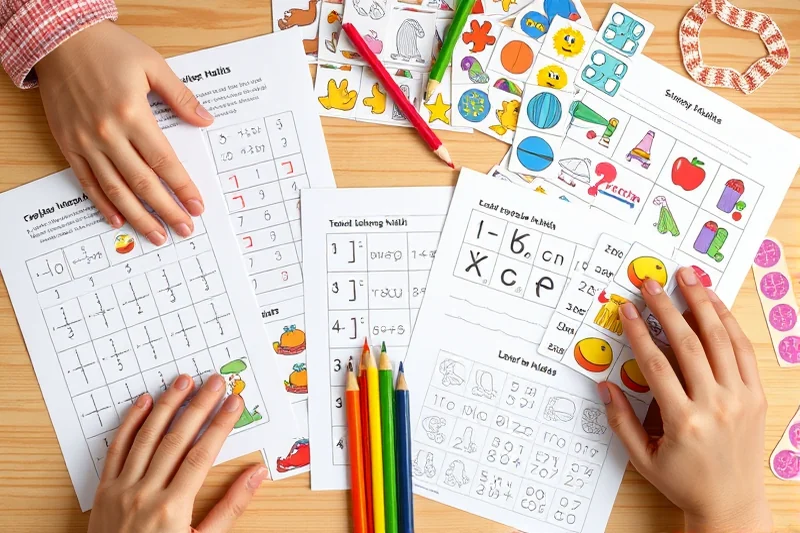
Measuring and comparing is one of the most hands-on and engaging simple early math games I’ve used with my son. Whether we're comparing the lengths of sticks, the weights of different toys, or the volumes of different containers, these activities help children understand the basics of size and quantity in a tangible way.
One of the most fun things about this game is that it can be done with almost anything you have around the house — measuring cups, rulers, or even a kitchen scale. I’ve had my son use a ruler to measure the length of his favorite books and then compare them with the length of his toys. This has helped him understand that some things are longer, shorter, heavier, or lighter than others.
The real-life application of this game is what makes it so valuable. I’ve seen my son become more confident in his ability to estimate and compare, and it’s helped him in other areas of learning too. Whether he’s comparing the size of two different fruits at the grocery store or trying to figure out which container holds more water, he’s using the same skills that are essential for future math learning.
Related: 6 grade math
Shape Identification: A Game That Helps Children Learn the Building Blocks of Geometry
Shape identification is a powerful simple early math game that I’ve used with my son to help him recognize the basic geometric shapes that form the foundation of geometry. Whether we're looking for circles in the sky, squares in the kitchen, or triangles in the park, these activities help children understand the shapes that make up the world around them.
One of the most fun variations of this game is to have my son find objects that match specific shapes. For example, I might ask him to find something round, something square, or something that looks like a triangle. He loves this game because it’s interactive and he gets to explore his environment while learning. I’ve seen him point out shapes in the most unexpected places, like the wheels on a toy car or the corners of a bookshelf.
The best part about shape identification games is that they’re not only educational but also deeply engaging. I’ve used this game with other children too, and it’s amazing how quickly they pick up on the names and properties of different shapes. It’s a simple way to build early geometry skills and lay the groundwork for more complex math concepts down the road.
⭐ Classic
A straightforward recipe that’s perfect for beginners or those who want a simple, no-frills approach to making play dough.
💰 Budget
This variation skips the optional ingredients and uses only the most essential materials, keeping the cost low while still creating a fun and educational activity.
⚡ Extra-Fast
A quicker version of the recipe that still produces a usable play dough, ideal for those who want to make the activity happen in a limited amount of time.
✨ Depth
This variation includes additional sensory elements, like food coloring or essential oils, to enhance the learning experience and make it more engaging for young children.
🥗 Light
A lighter, low-calorie version of the recipe that’s still fun and engaging for kids while being more health-conscious.
| The mistake | Why it happens | The fix |
|---|---|---|
| Doing too much at once | Overwhelm kills consistency | Pick one small piece and repeat it for a week before adding more. |
| Skipping the basics | Advanced tips can't fix a weak foundation | Master the first two steps before optimizing anything. |
What You'll Need tap to check off
- 1 lb all-purpose flour
- ½ cup salt
- water as needed
Method tap a step when done
- In a large mixing bowl, combine the flour and salt.
- Gradually add water, stirring until a dough forms.
- Knead the dough on a floured surface for 5-10 minutes until it is smooth and elastic.
- Divide the dough into four equal portions and shape each into a ball.
- Store the dough in an airtight container or wrap in plastic wrap and refrigerate for later use.
- When ready to use, let the dough come to room temperature for about 15-20 minutes.
Key Facts
Related: Riverview academy math and science
Simple Early Math Games
Related: K5 learning for math
Common Questions
How can I make these math games more engaging for my child?
Do these games work for all age groups?
Are these games effective for learning math?
Can these games be done without special materials?
References
- Early Learning Math Resources - South Carolina (ed.sc.gov)
- PDF Evidence-Based Practices for Teaching Math to Young Children (education.vermont.gov)
- PDF The Role of Math Games for Children s Early Math Learning: A Systematic ... (files.eric.ed.gov)
- Promoting Children's Early Mathematical and Statistical Understanding ... (drum.lib.umd.edu)
- Supporting Math Skills in Infants and Toddlers - ECLKC (headstart.gov)
Cite this guide
Countlane (2026). Simple Early Math Games. https://countlane.com/simple-early-math-games/
Feel free to cite or share this guide.