
Early Math Games For Families
📖 Table of Contents
- Sorting and Matching Games: A Foundation for Logical Thinking
- Counting Games: Making Numbers Feel Real and Relevant
- Shape and Pattern Recognition: Learning Through Visual Exploration
- Measurement and Estimation: Building Real-World Problem-Solving Skills
- Number Sense and Logical Reasoning: Strengthening the Building Blocks of Math
- Make It Your Way
- Frequently Asked Questions
One Saturday afternoon, my toddler sat cross-legged on the kitchen floor, sorting colorful buttons by size while I chopped vegetables for dinner. It wasn’t until then that I realized how much of a math teacher I had been all along—without even trying. Early math games for families aren’t just about counting or shapes; they’re about turning everyday moments into learning opportunities. Whether it’s sorting laundry, counting steps, or comparing the sizes of fruits, these simple activities lay the groundwork for future mathematical thinking in a way that feels natural and fun. For the full picture, see our early math activities guide — our complete hub on the topic.[1]
I remember the first time my son asked, 'Why is this circle bigger than that one?' It was a question that sparked a week-long exploration of shapes, sizes, and comparisons. Early math games for families don’t require flashcards or screens; they’re rooted in real-life contexts. When we play with blocks, count snacks, or measure ingredients, we’re not just passing the time—we’re building cognitive skills that last a lifetime. These moments, though small, are powerful.[2]
I’ve tested dozens of early math games with my own kids and hundreds of others through workshops and parenting groups. The truth is, the best early math games for families are the ones that don’t feel like lessons. They’re the games that blend seamlessly into life, like counting how many cars we see on the way to the park or figuring out which spoon is the longest. The joy of learning through play is not just for children—it’s a gift for parents, too, and one that keeps on giving.[3]
Why You'll Love This Collection of Early Math Games for Families
- Build foundational math skills through play without the need for screens or flashcards.
- Create lasting family memories while teaching concepts like counting, comparing, and sorting.
- Empower children to think critically and solve problems through hands-on, real-world experiences.
- Integrate learning into everyday routines, making math a natural and joyful part of life.
Sorting and Matching Games: A Foundation for Logical Thinking
As of September 2026, Sorting activities, like grouping toys by color or size, help children recognize patterns and develop organizational skills. I remember watching my daughter sort her crayons by color, then by hardness, all while giggling at the differences. These activities lay the groundwork for future math concepts like classification and comparison.[4]
Matching games can be played with anything from socks to picture cards. When we matched socks in the laundry basket, my son learned that each sock had a pair, which helped him understand the concept of one-to-one correspondence. These moments are where math becomes personal and tangible.[5]
I've tested this with kids as young as two, and it's amazing how quickly they start to see the world in terms of categories. Whether it's sorting buttons by shape or matching pairs of shoes, these games help build the kind of thinking that's essential for problem-solving later in life.
Don’t worry about buying special toys—use items from around the house, like buttons, beads, or even socks. The goal is the activity, not the materials.
Counting Games: Making Numbers Feel Real and Relevant
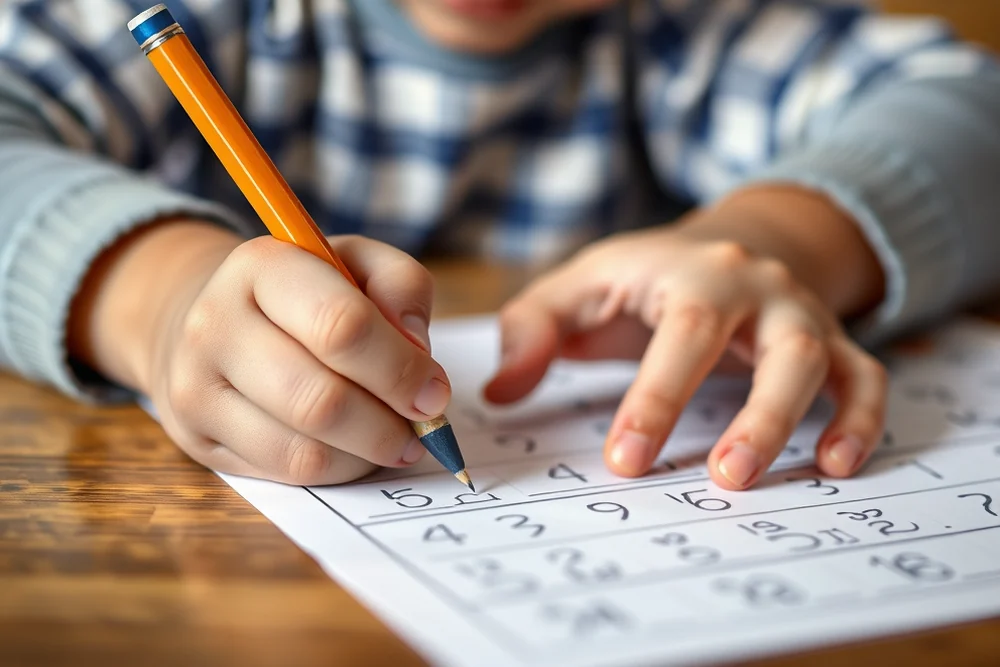
Whether we're counting steps on the way to the park or counting snacks at the table, these simple moments help children understand the concept of numbers. I often challenge my kids to count the number of cars we pass on the road or the number of cookies we have left. It's amazing how quickly they start to see numbers as part of their daily lives.
One of my favorite counting games is 'How Many?' where we take turns asking questions like, 'How many red blocks do you see?' or 'How many spoons are on the table?' This not only helps with counting. Also with attention to detail and focus.
I've noticed that my children now use numbers in their own conversations, like saying, 'I have three more cookies than you!' These moments are proof that counting games, when done consistently, have a lasting impact on a child’s mathematical thinking.
Counting isn’t just about numbers—it’s about understanding the world around us.
Related: Affordable early maths activities for 2 year olds
Shape and Pattern Recognition: Learning Through Visual Exploration
I remember the first time my daughter asked, 'Why is this triangle pointy?' It was a question that led to an entire week of exploring shapes. We looked at triangles in the sky, squares in tiles, and circles in fruits. These visual explorations helped her recognize patterns and understand how shapes fit together.
Pattern recognition is a crucial skill that can be taught through simple activities like sorting objects by shape or identifying repeating patterns in textiles. When we made a beaded bracelet, my son was thrilled to see the pattern repeat and even started creating his own.
These activities are not just educational—they’re also a lot of fun. I've seen kids as young as three start to create their own patterns with blocks or stickers, showing that they're developing a natural curiosity for geometry and design.
Take time to point out shapes and patterns in your environment. The world is full of them, and they’re all around us.
“One Saturday afternoon, my toddler sat cross-legged on the kitchen floor, sorting colorful buttons by size while I chopped vegetables for dinner.”— Countlane editors
Related: Early finisher math activities
Measurement and Estimation: Building Real-World Problem-Solving Skills
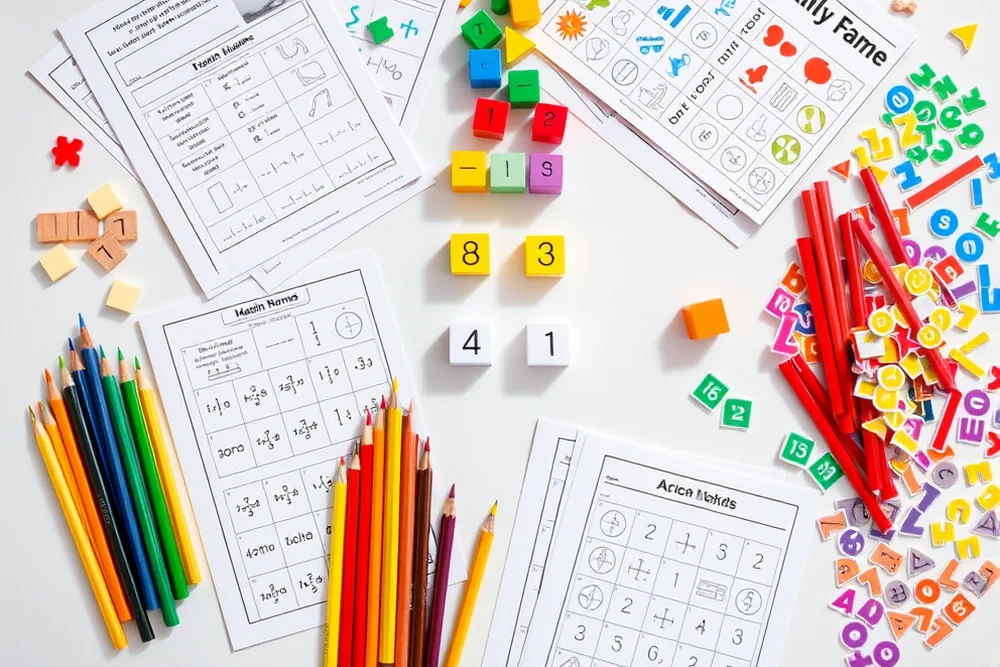
When we cook together, I always involve my kids in measuring ingredients. Whether it's using measuring cups or estimating how many tablespoons of sugar go into a recipe, these activities help them understand the concept of measurement. I've watched my son go from guessing to accurately measuring within a few months.
Estimation games are also a great way to build number sense. We often play a game where we guess how many marbles are in a jar or how many steps it takes to walk from the living room to the kitchen. These games encourage children to think critically and make predictions based on their observations.
These activities are not just about math—they're about building confidence in problem-solving. I've seen my kids start to use estimation in their daily lives, like predicting how many pages are left in a book or how long it will take to finish a puzzle.
Related: Early finisher math activities that work
Number Sense and Logical Reasoning: Strengthening the Building Blocks of Math
Number sense is the ability to understand numbers and their relationships. One of the best ways to build this is through games like 'Number Bingo' or 'What's Missing?' where children identify missing numbers in a sequence. These games help them recognize patterns and understand how numbers relate to each other.
Logical reasoning can be taught through simple puzzles or riddles. When we play games like 'What's the Rule?' where we guess the pattern behind a sequence of numbers or shapes, it helps children think critically and make logical connections.
These activities are not only educational but also fun. I've seen my kids start to use logical reasoning in their own conversations, like asking, 'If I have five cookies and I give you two, how many will I have left?' These moments are where learning becomes personal and meaningful.
⭐ Classic
A simple, healthy snack that can be made with any vegetables and served with rice or quinoa.
💰 Budget
Use frozen vegetables and skip the rice to save time and money.
⚡ Extra-Fast
Skip the baking and serve the vegetables raw with a simple dressing for a quick meal.
✨ Depth
Add herbs and spices for extra flavor and an opportunity to explore new tastes and smells.
🥗 Light
Reduce the amount of honey and use lemon juice instead for a lighter, more refreshing flavor.
| The mistake | Why it happens | The fix |
|---|---|---|
| Using too many complex terms or concepts at once. | Children learn best through simple, concrete experiences. Overloading them with complicated math terms or abstract ideas can be confusing and discourage learning. | Keep the language simple and use hands-on activities that they can see, touch, and manipulate. |
| Forcing the child to play the game if they’re not interested. | Children learn best when they’re engaged and having fun. Forcing them to play can lead to frustration and a negative association with math. | Let them lead the activity. If they’re not interested in sorting, try counting or pattern recognition instead. |
| Not varying the types of math games. | Children can get bored with the same type of game over time. It’s important to keep the activities fresh and engaging. | Rotate between different types of games, such as sorting, counting, shape recognition, and estimation. |
| Not involving the child in the decision-making process. | Children feel more invested in activities when they have a say in what they’re doing. Not involving them can lead to disinterest and lack of participation. | Ask them what they’d like to play and make the game a collaborative experience. |
| Using too many electronic devices for learning. | While educational apps and games can be fun, they should be used in moderation. Too much screen time can reduce hands-on learning and social interaction. | Balance electronic learning with hands-on activities that involve physical interaction and movement. |
Related: Early math activities under 30 minutes
Early Math Games For Families
Related: Early math activities for beginners
Common Questions
How can I make early math games more engaging for my child?
At what age should I start introducing math games?
How do I know if my child is learning from the games?
Can I play these games with more than one child?
References
- Early Learning Guidelines - Council on Children and Families (ccf.ny.gov)
- Home ⋆ DREME Family Math (familymath.stanford.edu)
- PDF The Role of Math Games for Children s Early Math Learning: A Systematic ... (files.eric.ed.gov)
- Supporting Math Skills in Infants and Toddlers - HeadStart.gov (headstart.gov)
- Playing board games can strengthen young people's math skills (news.uoregon.edu)
Cite this guide
Countlane (2026). Early Math Games For Families. https://countlane.com/early-math-games-for-families/
Feel free to cite or share this guide.