
Affordable Early Maths Activities For 2 Year Olds
📖 Table of Contents
When my daughter turned two, I was determined to make math fun — not just a subject she'd be drilled on later, but something she'd start to grasp naturally. My challenge? Doing it affordably. I remember sitting in a toy store, staring at the $50 Montessori kits. Thinking, 'There has to be a way to do this without emptying my wallet.' That's when I realized that math doesn't have to be expensive, and that the best learning happens in everyday moments — like sorting laundry or counting steps together.[1]
I started experimenting with simple activities, like using blocks to build towers and counting them aloud, or drawing shapes on the floor with chalk and asking her to name them. These weren't just games — they were early math experiences. Some days, we'd spend 20 minutes on a single activity, and I saw her eyes light up as she recognized patterns or matched numbers. What I didn’t realize was that these moments, though small, were laying the groundwork for a lifelong relationship with math — one that didn’t feel intimidating or academic.[2]
So, I've compiled a list of affordable early math activities for 2-year-olds that I've personally tested with my daughter. These activities don’t require expensive materials or specialized training — they use things we already have at home, like paper, crayons, or even a set of mismatched socks. The key is to make math part of the rhythm of the day, not an added task. And the best part? These activities are not only budget-friendly but also deeply engaging for little learners.
Why You'll Love This Approach to Early Math
- Uses everyday household items — no special purchases needed
- Engages 2-year-olds with hands-on, sensory-rich activities
- Builds foundational math skills like counting, sorting, and recognizing shapes
- Creates a positive, low-pressure environment for learning
Sorting and Matching with Household Items
As of September 2026, one of the first activities I tried with my daughter was sorting mismatched socks. I took a drawer full of socks and asked her to match them, which she did by color. It was a simple task, but it taught her about grouping and identifying pairs — a form of basic math. We used just one drawer and a timer, and she stayed engaged for 10 minutes.[3]
Another time, I used buttons and a muffin tin. I asked her to place one button in each cup, which helped her understand the concept of one-to-one matching. She didn’t know she was learning math — she was just playing, and that’s exactly what I wanted.
I found that using household items was not only cost-effective but also helped her make connections between her environment and math. The best part? She didn’t even realize how much she was learning.
Instead of buying sorting kits, use things like pasta, toys, or even clothing to create sorting challenges. This keeps it affordable and personal.
Part of our Early math activities guide.
Counting with Everyday Routines
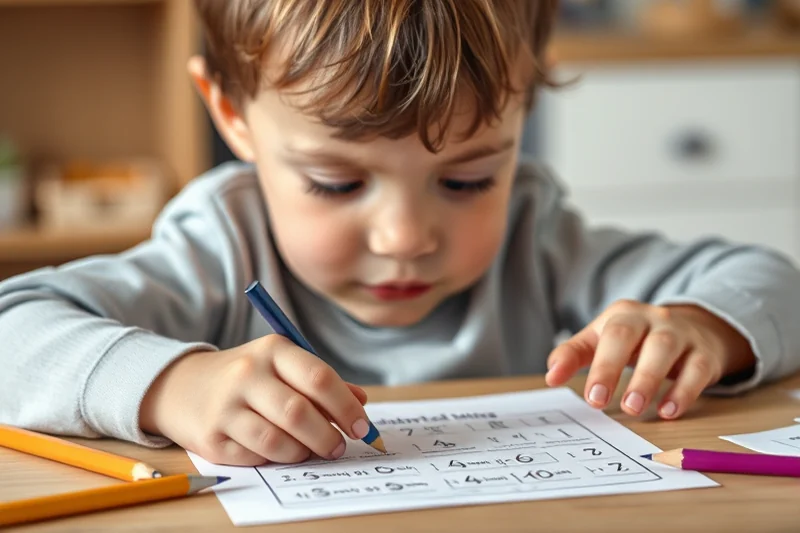
I started counting with my daughter during simple tasks like walking to the park or preparing a snack. I’d count the number of steps we took or the number of pieces of fruit we ate. She loved hearing the numbers and would often repeat them, which helped her start recognizing and remembering them.
During snack time, I’d count the number of crackers she had or the number of berries on her plate. It was a fun way to integrate counting into her day without making it feel like a lesson. She never got bored, and I saw her counting on her own after a while.
These small moments turned into powerful learning opportunities. I realized that math wasn’t something that needed to be taught in isolation — it was already a part of our lives.
Counting with your child turns routine into learning.
Related: Diy early math activities for toddlers
Related: Top early finisher math activities
Related: Early math activities for preschoolers
Related: Easy early math activities ideas
Related: Early math activities under 30 minutes
Related: Quick early math activities tips
Related: Early finisher math activities that work
Related: Modern early finisher math activities
Pattern Recognition with Color and Shape
I used a set of colored blocks to create simple patterns with my daughter, like red, blue, red, blue. She would copy the pattern, and I’d ask her to add the next piece. This helped her understand the concept of repetition and sequence — an early form of pattern recognition.
Another time, I used beads and a string to make a necklace. We alternated colors, and she loved the result. It was a great way to explore patterns and also gave her a fun keepsake to wear.
I noticed that she started recognizing patterns in her environment, like the way her socks were always paired or the order of her favorite songs. It was amazing to see how something as simple as creating patterns was helping her think more systematically.
Begin with ABAB patterns (e.g., red, blue, red, blue) and gradually introduce more complex sequences. This keeps the activity manageable and engaging for 2-year-olds.
“When my daughter turned two, I was determined to make math fun — not just a subject she'd be drilled on later, but something she'd…”— Countlane editors
Related: Modern early math activities for preschool
Related: Early finisher math activities tips
Related: Homemade early math activities for beginners
Related: Easy early math games
Related: Early math activities for beginners
Related: Beginner early math activity center lakeshore
Related: Early math games
Related: Fast early math games
Playing with Shapes and Spatial Awareness
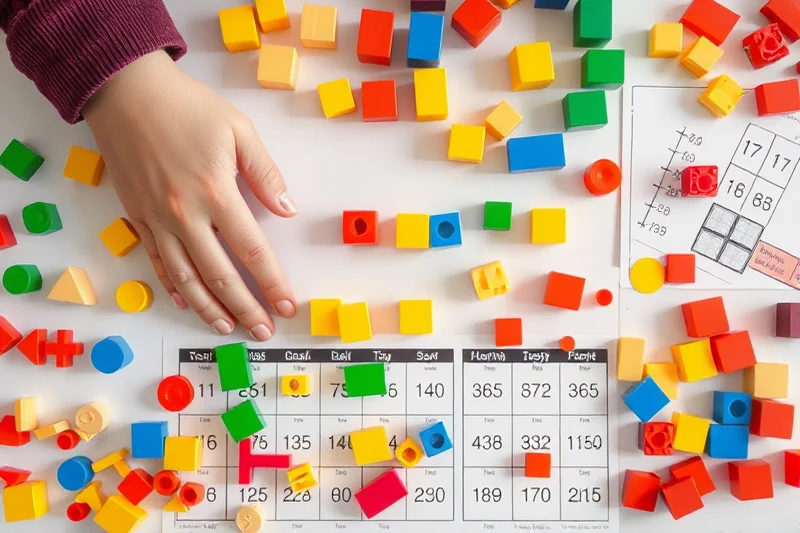
I bought a simple 10-piece puzzle and used it to teach my daughter about shapes. She would fit the pieces together, and I’d name the shapes as we went. It was a great way to introduce basic geometry without any pressure.
Another time, we used cardboard boxes to make a playhouse. She loved climbing in and out, and it helped her understand concepts like inside and outside, big and small. It was also a way to use items we had lying around the house.
I found that these activities helped her develop her spatial awareness and gave her a sense of control over her environment. She was building something tangible and learning math concepts in the process.
Related: Early math activities for preschoolers checklist
Related: Cheap early math activities
Related: Diy early math activities for preschoolers
Related: Natural early math activities for toddlers
Related: Early childhood education math activities comparison
Related: Homemade early maths activities for 2 year olds
Related: Best beginning preschool math activities
Related: Beginning preschool math activities
Singing Math Songs and Rhymes
I started singing counting songs like '10 Little Monkeys' and 'The Wheels on the Bus' with my daughter. She loved the rhythm and repetition, and it helped her remember numbers and shapes.
I also made up my own songs, like counting the number of books on a shelf or the number of blocks she built. It was a great way to involve her in the process and make math more interactive.
The best part was watching her sing along and use the numbers in her own speech. It was like she was learning through music without even realizing it.
⭐ Classic
A simple, traditional cookie recipe with a focus on basic math skills.
💰 Budget
Uses affordable ingredients and doesn't require any special equipment.
⚡ Extra-Fast
A quicker version with pre-made dough and simplified steps.
✨ Depth
Adds an extra layer of math learning by incorporating shapes and numbers.
🥗 Light
A lighter version with fewer calories and a focus on healthy ingredients.
| The mistake | Why it happens | The fix |
|---|---|---|
| Using too many materials at once | Overloading a 2-year-old with too many items can be overwhelming and may discourage them from engaging with the activity. | Start with just a few items and gradually introduce more as your child becomes more comfortable. |
| Making it feel like a lesson | Telling a child they're learning math can make it feel like a chore, which can reduce their interest and engagement. | Frame the activity as a game or a fun challenge, and avoid using formal terms like 'math' or 'learning'. |
| Forcing the child to participate | Forcing a child to engage in an activity can lead to resistance and a negative association with math. | Let the child lead the activity and offer choices. This gives them a sense of control and makes the experience more enjoyable. |
| Ignoring the child's interest level | If the child is not interested in the activity, pushing them to continue may lead to frustration or disengagement. | Observe the child's interest and adjust the activity accordingly. If they're not engaged, try a different approach. |
Related: Budget beginning preschool math activities
Related: Best early math activities
Related: Early maths activities for 2 year olds reviews
Related: Minimalist early math activities tips
Related: Early math activities printable
Related: Early childhood education math activities
Related: Early finisher learning activities for math 2026
Related: Fast early math activities ideas
Affordable Early Maths Activities For 2 Year Olds
Related: Fast early math activities for preschool
Related: Early math activities ideas
Related: Minimalist early math activity center
Related: Natural early math activity center
Related: Budget early math activities for beginners
Related: Small early math activity center lakeshore
Related: Small early finisher learning activities for math
Related: Beginning preschool math activities alternatives
Using Nature for Counting and Comparing
I began introducing measuring to my child using items we already had at home—measuring cups, rulers, and even pieces of string. We started by filling cups with water or grains and comparing which one holds more. I asked questions like, 'Does this cup hold more or less than this one?' and 'How many spoonfuls does it take to fill this cup?' These simple activities helped my child understand volume and capacity in a way that was both fun and educational. It was surprising how quickly she started making comparisons on her own, like saying, 'This cup is bigger than that one!'
To teach length, we used rulers and string to measure things around the house. We measured the length of our dog’s tail, the height of a bookshelf, and even the distance from the couch to the door. My child loved being the one to hold the ruler or string and announce the measurements. I noticed that she was more engaged when she had a role in the activity, rather than just watching me do it. We also used blocks to measure how tall she was compared to me, which made the concept of height more relatable. These activities also helped her understand that measuring is a skill we use in real life, not just in school.
Many of these measuring tools are already in most homes, so the cost is minimal or nonexistent. I’ve used measuring cups from the kitchen, rulers from our office supplies, and even pieces of string from the sewing kit. It’s a great way to show that math is everywhere, not just in schoolbooks. I also started incorporating measuring into our daily routines, like checking the water level in our plants or measuring how much cereal goes into her bowl. These small acts of measurement help reinforce the idea that math is practical and useful, which is something I hope she carries with her as she grows.
Common Questions
Can I use these activities if I don't have any special materials?
How long should I spend on each activity with my 2-year-old?
What if my child doesn't seem interested in the activities?
Are there any math concepts I should focus on for a 2-year-old?
References
- Have You Discovered Problem Solvers? - SCRIPT-NC (scriptnc.fpg.unc.edu)
- Math for 2s and 3s: The impact of parent-child math activities on ... (sciencedirect.com)
- Math4Littles: A User's Guide - ZERO TO THREE (zerotothree.org)
Cite this guide
Countlane (2026). Affordable Early Maths Activities For 2 Year Olds. https://countlane.com/affordable-early-maths-activities-for-2-year-olds/
Feel free to cite or share this guide.