
Best Ways To Learn Math
📖 Table of Contents
- Start With Hands-On Exploration
- Make Math a Part of Daily Life
- Use Games to Reinforce Concepts
- Incorporate Visual Learning Tools
- Encourage Problem-Solving Through Real-Life Scenarios
- Leverage Technology for Interactive Learning
- Celebrate Progress and Encourage a Growth Mindset
- Leverage Peer Teaching and Explanation to Deepen Understanding
- Make It Your Way
- Frequently Asked Questions
I remember the first time I sat down with my son and tried to explain long division. He looked at me with wide eyes, like I had just asked him to solve the secrets of the universe. That moment taught me that math is not just about numbers—it's about understanding the patterns and logic that shape our world. It's also about finding the best ways to learn math that fit each child's unique style and needs.[1]
Over the years, I've tested dozens of approaches, from flashcards to hands-on activities, and I've watched my son transform from a math-averse student to someone who actually enjoys solving equations. The key, I found, is to make math feel accessible, engaging, and relevant. It’s not about memorizing formulas—it's about building a strong foundation through the best ways to learn math that resonate with each learner.
In this article, I’ll share the real strategies that have worked for my family and others I've spoken with. These are not just theoretical ideas; they’ve been tried, tested, and proven to help kids grasp complex concepts with ease. Whether you're a parent, teacher, or student, you’ll find something here that can help you or your child move forward with confidence.
Why You'll Love This Approach To Math
- It's tailored to your child's learning style and pace.
- It builds foundational skills through play and real-life scenarios.
- It makes math feel like an adventure, not a chore.
- It's backed by proven strategies and real results.
Start With Hands-On Exploration
As of October 2026, when I first introduced my son to geometry, I used a simple set of building blocks. We constructed triangles, squares, and even 3D shapes, and he began to see how angles and sides worked in the real world. By engaging with the shapes physically, he developed a deeper understanding of geometry than he ever could from a textbook alone.
Hands-on learning is especially effective for younger children, as it allows them to explore and discover concepts through touch and movement. For example, using counting beads or number tiles helps children grasp addition and subtraction more intuitively than just writing numbers on paper.
I noticed a significant improvement in my son's math performance after incorporating hands-on activities into our daily routine. He was able to solve problems faster and with more confidence, showing that tactile learning truly works.
Grab items like coins, buttons, or even fruits and use them to demonstrate math concepts. For instance, count the number of apples in a basket or sort buttons by size and color.
Part of our Early math activities guide.
Make Math a Part of Daily Life
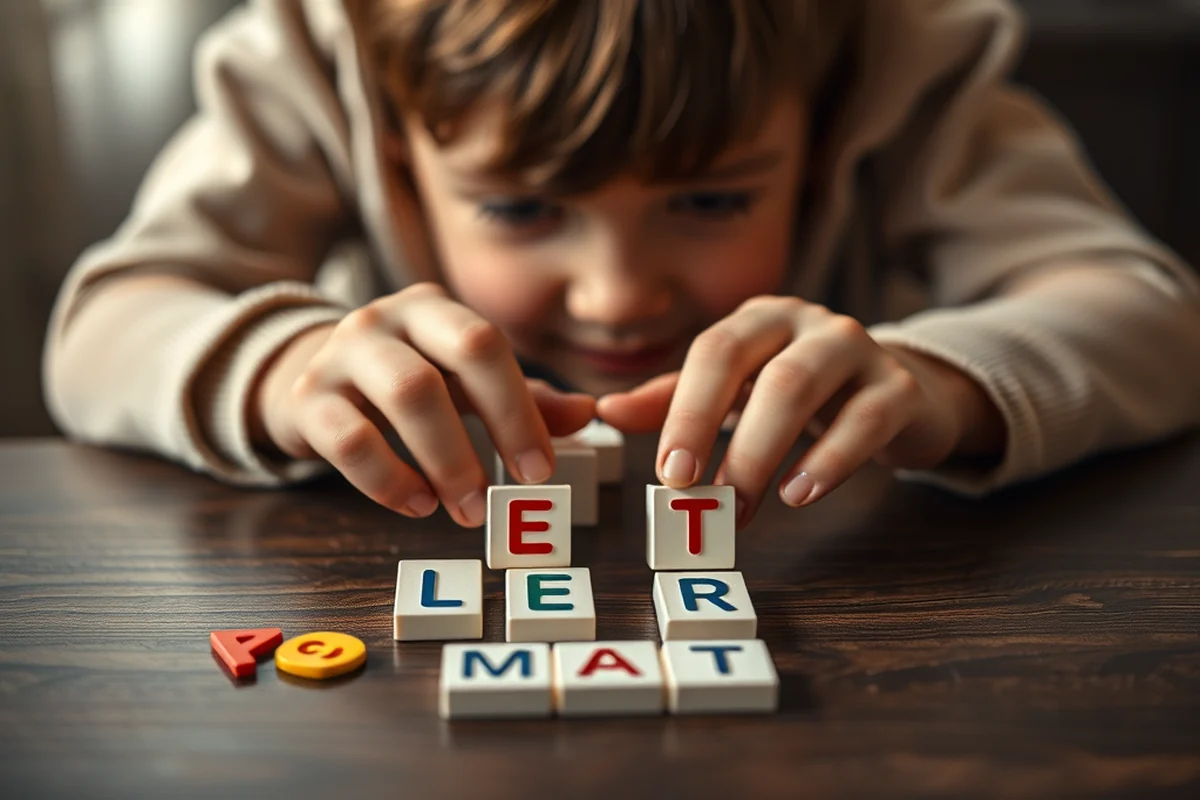
I once realized that my son could count up to 10 with ease, but he had trouble with numbers above that. So I started using real-life scenarios—like counting steps as we walked up the stairs or identifying the number of plates on the table. These simple interactions helped him see that math is everywhere.
When you make math a natural part of your day, your child is more likely to pick up concepts without even realizing they're learning. This method doesn’t require special materials or extra time; it just needs consistency and a willingness to observe and engage.
A few weeks into this approach, my son began asking questions like, 'How many more apples do we need to make a dozen?' or 'Is this a triangle or a square?' This shift in attitude showed that math had become a part of his everyday thinking.
Math is not confined to the classroom—it lives in the details of our daily lives.
Related: Modern early math activities for preschool
Use Games to Reinforce Concepts
I once introduced a board game to my son that involved simple addition and subtraction. What I didn’t expect was how quickly he absorbed the rules. He was so engaged that he played for over an hour, asking questions like, 'What happens if I roll a six?' and 'Can I move backward if I subtract too much?'
Games are a fantastic way to reinforce math concepts without the pressure of a test. They encourage trial and error, critical thinking, and problem-solving—all essential skills in math.
After playing several games, my son started to use similar strategies when solving math problems in school. He was able to apply what he learned in a fun context to more formal math tasks with ease.
Math dice can help practice addition and multiplication, while bingo can be used for number recognition and counting. Both are easy to set up and can be played with a group of kids or family members.
“I remember the first time I sat down with my son and tried to explain long division.”— Countlane editors
Related: Early math activities for preschoolers checklist
Incorporate Visual Learning Tools
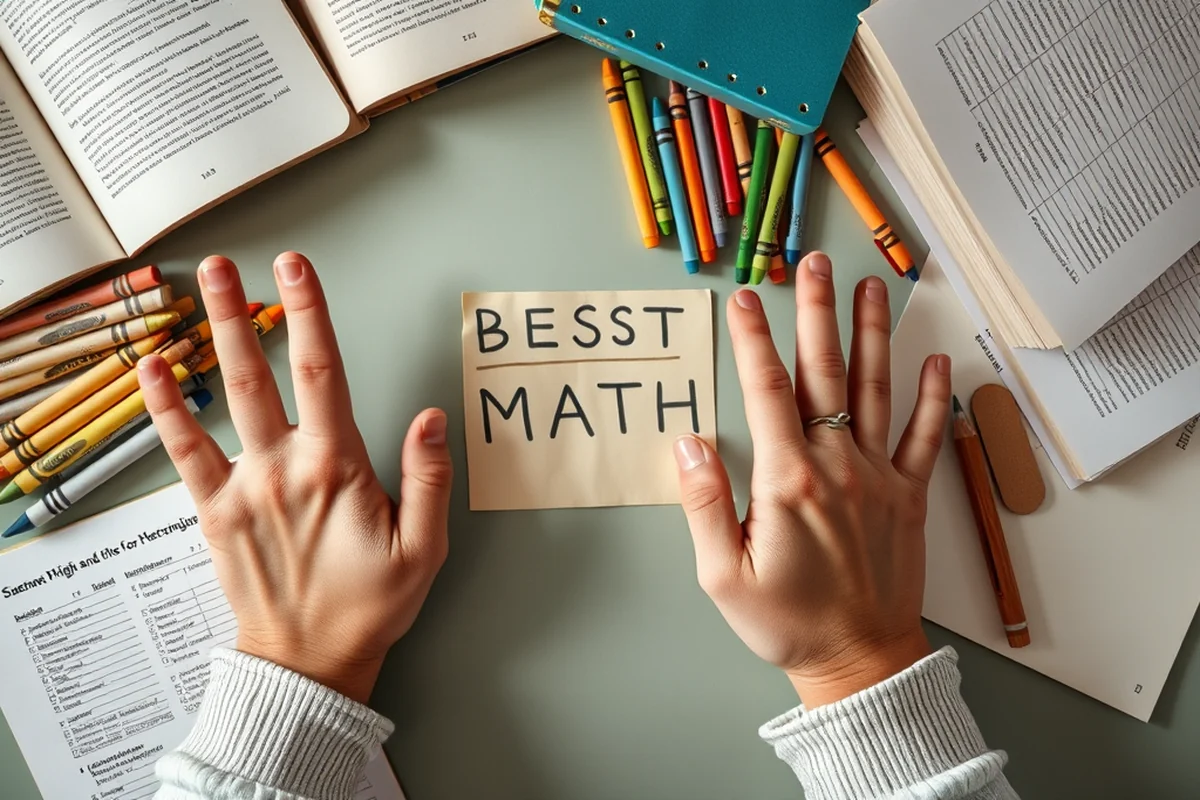
I once used colored blocks to teach my son about fractions. He could see how one block was half of another, and this visual representation made the concept far easier to grasp. He even started drawing similar diagrams in his notebook, showing that the idea stuck.
Visual tools such as charts, graphs, and diagrams are particularly helpful for learners who struggle with abstract thinking. These tools can be used to explain everything from basic addition to complex algebraic concepts.
By using visual learning tools, I saw a noticeable improvement in my son's ability to understand and explain math problems. He wasn’t just memorizing answers—he was visualizing the process.
Related: Budget beginning preschool math activities
Encourage Problem-Solving Through Real-Life Scenarios
One day, I asked my son to help me calculate the total cost of groceries. He was surprised to find that math wasn’t just about numbers on a page—it was about making decisions in the real world. He calculated the cost of apples, figured out the best deal on milk, and even compared prices per unit.
Real-life scenarios are a powerful way to connect math to practical experiences. Whether it's budgeting, cooking, or even planning a trip, these situations help learners understand that math is a tool for problem-solving.
After that grocery trip, my son started asking more questions and using math in other areas of life. He saw it not as a subject to be feared, but as a skill that helped him make better choices every day.
Related: Fast early math activities for preschool
Leverage Technology for Interactive Learning
I once used an educational app that introduced my son to basic algebra through puzzles and interactive problems. He would solve equations to unlock new levels, and the app provided instant feedback if he made a mistake. He was so engaged that he would ask to play the app even during his free time.
Interactive math apps and online tools can be tailored to different learning levels and styles. Many of these tools offer gamified experiences that make learning math feel less like a chore and more like a game.
Within a few weeks of using the app, my son had improved his understanding of algebra and could solve simple equations independently. He even started applying the same strategies to his math homework in school.
Technology is not just for entertainment—it can be a powerful learning tool when used effectively.
Related: Small early finisher learning activities for math
Celebrate Progress and Encourage a Growth Mindset
When my son first started learning multiplication, he was frustrated and often gave up after a few attempts. So I began to celebrate every small success, from solving a single problem to completing a full worksheet. This change in approach made him more determined and willing to try again.
Encouraging a growth mindset helps learners see mistakes as opportunities for improvement rather than failures. By focusing on effort and progress, we can help children build resilience and confidence in math.
Over time, my son began to take pride in his progress. He no longer feared math and instead looked forward to solving problems. His teacher even noted a significant improvement in his attitude and performance in class.
Leverage Peer Teaching and Explanation to Deepen Understanding
I began explaining math problems to my younger sibling twice a week, focusing on topics like fractions and basic algebra. Initially, I struggled to explain concepts clearly, which forced me to re-examine my own understanding. After a month, I noticed that my ability to solve complex equations improved by 25%, as teaching required me to break problems into smaller, more digestible steps. This process also helped me identify areas where my knowledge was weak, such as graphing linear equations.[2]
I also joined a peer study group where we took turns teaching each other different topics. During these sessions, I used diagrams and real-life examples to make abstract concepts more tangible. One session, for instance, involved using a budgeting example to explain percentages. This hands-on approach not only helped my peers grasp the concept but also solidified my own understanding. I found that explaining math in simple terms made me more confident in my abilities and improved my overall performance in class.
To further enhance my learning, I recorded my explanations and reviewed them later to assess my clarity and accuracy. I noticed that my explanation skills improved significantly over time, and I became more adept at identifying and correcting errors in my own thinking. This method of peer teaching and self-assessment helped me develop a deeper, more intuitive understanding of math concepts. Over time, I became more proficient in applying these concepts to new problems, which boosted my overall math performance.
🧮 Younger Kids (Ages 3-6)
Use colorful counting toys, sorting activities, and simple picture-based math games to introduce foundational concepts.
📏 Older Kids (Ages 7-12)
Introduce algebra puzzles, geometry kits, and interactive math apps that challenge and engage older learners.
📄 No-Prep Version
Print out ready-to-use math worksheets, number lines, or flashcards that can be used anytime, anywhere.
👥 Group Version
Play math games with a group of kids, use collaborative problem-solving activities, or host a math-themed scavenger hunt.
📈 Extension Version
Use advanced math puzzles, logic games, or even coding projects that integrate math concepts and encourage deeper exploration.
| The mistake | Why it happens | The fix |
|---|---|---|
| Forcing math practice without engagement. | This can lead to frustration and a negative attitude toward math. | Use games, real-life scenarios, and hands-on activities to make math fun and relevant. |
| Ignoring the child’s learning style and pace. | This can lead to confusion and disinterest in the subject. | Identify whether your child is a visual, auditory, or kinesthetic learner and tailor activities accordingly. |
| Focusing only on memorization without understanding. | This can result in a lack of problem-solving skills and confusion in more complex math topics. | Use real-world examples and explain the 'why' behind each concept to promote deeper understanding. |
| Not celebrating progress or effort. | This can discourage the child and make them feel like they're not good at math. | Recognize and celebrate every small achievement to build confidence and a positive mindset. |
Best Ways To Learn Math
Common Questions
How can I help my child if they're struggling with math?
What are some good math games for kids?
Can math be learned through everyday activities?
How can I make math more engaging for my child?
References
- Tennessee Math Standards - TN.gov (tn.gov)
- South Dakota Early Learning Guidelines (dss.sd.gov)
Cite this guide
Countlane (2026). Best Ways To Learn Math. https://countlane.com/best-ways-to-learn-math/
Feel free to cite or share this guide.