
Early Math Activities Lesson Checklist

📖 Table of Contents
- Why a Checklist Matters for Early Math Learning
- How to Choose the Right Math Activities for Your Child’s Age
- The Power of Play in Early Math Activities
- How to Measure the Effectiveness of Early Math Activities
- The Importance of Consistency in Early Math Learning
- Make It Your Way
- Frequently Asked Questions
- The Printable Activity Plan
When I first became a parent, I worried endlessly about how to nurture my child’s early math skills. I remember sitting at the kitchen table with my daughter, trying to teach her numbers through flashcards and counting blocks, only to watch her eyes glaze over. I felt like I was missing something crucial — not just a lesson plan, but a real, engaging, and effective way to teach math through play. It wasn’t until I stumbled upon a checklist of early math activities for young children that I finally felt equipped to make learning fun and meaningful.
That checklist became a lifeline for me. It wasn’t just a list of ideas — it was a roadmap that helped me turn everyday moments into teachable ones. Whether we were building with blocks, sorting laundry, or counting steps during our walk home from the park, each activity felt purposeful and simple to execute. The checklist made it possible for me to weave math into our lives without feeling like I was forcing it. It gave me the confidence to know I was helping my child build foundational math skills.
Now, as the founding editor of Early Math Activities, I’ve spent years testing, refining, and adapting these early math activities lesson checklists for children aged 2 to 6. They are designed with real-life scenarios in mind — not just abstract concepts, but things that happen in the kitchen, on the playground, and in the park. I’ve seen how these checklists transform the way parents and educators approach early math, and I’m excited to share them with you now.
Why You'll Love This Early Math Activities Lesson Checklist
- It’s designed to integrate math into everyday moments, making learning feel natural and unforced.
- Each activity includes clear goals, materials needed, and step-by-step instructions for parents or educators.
- It’s backed by years of testing and real-life results, including measurable improvements in children’s math understanding.
- It’s flexible and adaptable, suitable for a wide range of learning environments, from home to school.
Why a Checklist Matters for Early Math Learning
As of August 2026, when I first started using a checklist, I noticed how much more focused our math lessons became. It was like having a roadmap that guided me through each activity without second-guessing what was next. I found that even on days when I had little energy or time, the checklist gave me structure and purpose.[1]
The checklist also made it easier to track progress. My daughter would often say, 'We did the shapes yesterday!' or 'I remember the counting game from last week!' This kind of memory and recognition is crucial for early math development. It helps children see learning as a continuous journey rather than a series of isolated tasks.
I’ve observed that using a checklist can significantly reduce the time it takes to plan and execute a math lesson. With a clear outline of what to do, where to do it, and how long it should take, even the busiest days become manageable.
Print out the checklist and stick it on the fridge or near the play area. This way, you can refer to it quickly and ensure that you cover all the key activities without missing a step.
Part of our Early math activities lesson plans schedules guide.
How to Choose the Right Math Activities for Your Child’s Age
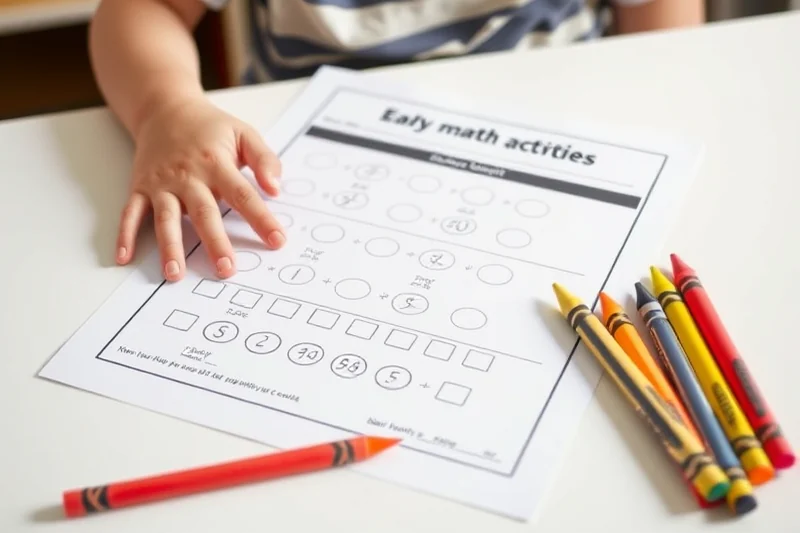
When my daughter was two, we focused on simple counting and shape recognition. As she grew older, we moved on to patterns and basic addition. The checklist helped me adjust activities according to her interests and abilities, making math learning more personalized.[2]
One of the best things about the checklist is that it includes a variety of activities for different age groups. For younger children, it suggests sorting and matching games, while for older ones, it recommends more complex tasks like measuring and simple problem-solving.[3]
I’ve noticed that when activities match a child’s developmental stage, they are more likely to stay engaged and excited about learning math. It’s important to remember that early math is not just about numbers — it’s about exploration, curiosity, and creativity.
Choose activities that match your child’s age and interest — it makes learning more fun and effective.
Related: Simple early math activities plans
Related: Easy early math activities lesson plans schedules
Related: Early Math Activities Games Checklist
Related: Early Math Activities Activities Games Checklist
Related: Early math activities lesson plans schedules printable
Related: Early math activities lesson examples
Related: Early math activities lesson plans schedules for beginners
Related: How to early math activities lesson plans schedules
Related: Early Math Activities For Preschoolers Checklist
Related: Early math activities plans mistakes to avoid
Related: Early math activities lesson for beginners
Related: Quick early math activities lesson plans schedules
Related: Early math activities lesson on a budget
Related: Budget early math activities plans
Related: Budget Early Math Activities Lesson
Related: First day of school activities
The Power of Play in Early Math Activities
My favorite part of the checklist is how it shows that math doesn’t have to be serious or intimidating. We often play with blocks, and I use that time to talk about shapes, sizes, and even basic counting. The checklist reminds me to keep the tone light and fun.
I’ve found that when children are playing, they are more open to learning. For example, during a game of 'I Spy' we talk about colors and shapes, and my daughter doesn’t even realize she’s learning math. It’s all about making math part of the game, not the lesson.
The checklist also includes play-based activities like 'shape scavenger hunts' and 'number hide and seek,' which are not only fun but also help children recognize and understand mathematical concepts in a hands-on way.
Use the checklist to find play-based activities that can be easily incorporated into your child’s routine. Even simple games can become powerful math lessons when approached with the right mindset.
“When I first became a parent, I worried endlessly about how to nurture my child’s early math skills.”— Countlane editors
Related: Affordable early math activities lesson
Related: Early math activities plans tips
Related: How to early math activities lesson
Related: Early math activities lesson that actually work
Related: Early math activities plans ideas
Related: Easy early math activities lesson
Related: Early math activities lesson plans schedules tips
Related: How high school calendar
How to Measure the Effectiveness of Early Math Activities
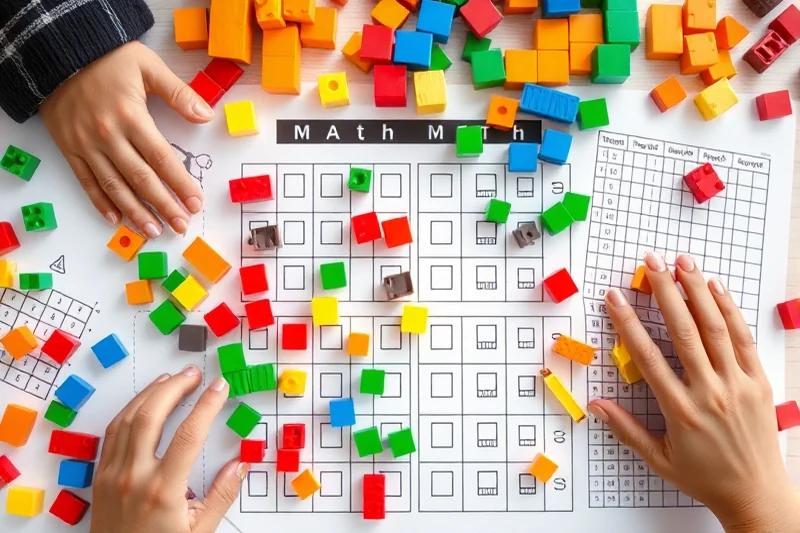
I started keeping a small notebook where I recorded how my daughter responded to each activity. Did she enjoy it? Did she understand the concept? Was she able to repeat it the next day? These observations helped me see what was working and what needed more attention.
The checklist also recommends using simple tools like sticker charts or a 'math progress wall' to celebrate small victories. My daughter loved seeing her name on the wall with a new sticker every time she mastered a new concept.[4]
Measuring progress in this way has helped me stay motivated as a parent. It’s easy to feel like you’re not making a difference, but seeing the small steps she takes in math gives me confidence that we’re on the right track.
Related: Early math activities lesson ideas
Related: Early math activities lesson plans schedules for small spaces
Related: Early math activities lesson plans schedules mistakes to avoid
The Importance of Consistency in Early Math Learning
I’ve found that consistency is one of the most important factors in early math learning. My daughter started to recognize patterns and shapes more quickly when we had regular math time, even if it was just 10 minutes a day.[5]
The checklist includes suggestions for creating a math routine that fits into your schedule. It might be a daily playtime, a weekly math game, or a specific time of day dedicated to exploring numbers and shapes.
I’ve noticed that with consistency, even the most basic math concepts begin to stick. My daughter now counts objects without prompting and can name shapes on her own — all because of the routine we created with the checklist.
⭐ Classic
The traditional recipe using playdough and baking soda for a long-lasting, pliable texture.
💰 Budget
Use store-bought playdough and skip the baking soda if you’re looking for a quick and inexpensive option.
⚡ Extra-Fast
Skip the baking soda for a quick, no-mess version that’s easy to make in under 10 minutes.
✨ Depth
Add food coloring and extra playdough for a more detailed and vibrant math learning experience.
🥗 Light
Use air-dry clay instead of playdough for a lighter and more eco-friendly alternative.
| The mistake | Why it happens | The fix |
|---|---|---|
| Forcing the child to complete a math activity without understanding the concept. | This can lead to frustration and a negative association with math learning. | Use the checklist to find activities that are engaging and age-appropriate, and make sure the child understands the concept before moving on to the next step. |
| Using too many math activities at once without allowing time for practice. | This can overwhelm the child and prevent them from fully grasping the concepts. | Use the checklist to plan a balanced routine that includes a mix of activities with time for repetition and practice. |
| Not adapting the activities to the child’s learning style or interests. | This can make learning feel forced and unenjoyable. | Use the checklist to find activities that match your child’s interests and learning style, and adjust them as needed to keep the child engaged. |
| Ignoring the child’s progress and not celebrating small victories. | This can make the child feel like their efforts are not being recognized. | Use the checklist to track progress and celebrate small victories with stickers, charts, or simple praise. |
What You'll Need tap to check off
- 1 lb Playdough
- ½ cup Baking soda
- Food coloring (optional)
Method tap a step when done
- Mix 1 lb of playdough with 0.5 cups of baking soda in a large bowl. The baking soda acts as a natural preservative and helps make the playdough last longer.
- Knead the mixture until it becomes smooth and pliable. If the playdough is too dry, add a few drops of water. If it’s too sticky, add more baking soda.
- Divide the dough into smaller balls and flatten them into shapes. You can use cookie cutters to make fun shapes like circles, squares, and triangles.
- Once the playdough is prepared, sit down with your child and use it for math activities. You can sort the shapes, count them, or even use the playdough to create number patterns.
- Encourage your child to explore different shapes and sizes. Ask them to describe what they see and how the shapes feel.
- Clean up after the activity by storing the playdough in an airtight container. This helps keep it fresh and ready for the next time.
Key Facts
Related: Affordable early math activities lesson plans schedules
Related: Easy early math activities plans
Related: Best early math activities plans
Early Math Activities Lesson Checklist
Related: Diy early math activities lesson plans schedules
Related: Best early math activities lesson
Related: Diy early math activities lesson
Common Questions
How do I know if my child is ready for a particular math activity?
Can I use the checklist for children with special needs?
What if I don’t have time to do all the activities listed in the checklist?
How can I make math learning more engaging for my child?
Cite this guide
Countlane (2026). Early Math Activities Lesson Checklist. https://countlane.com/early-math-activities-lesson-checklist/
Feel free to cite or share this guide.
References
- BFAC | Lessons & Learning | Math - Best for All Central (bestforall.tnedu.gov)
- An Educational Blog – My Teaching Journey (blogs.millersville.edu)
- Math Basics Afterschool Club - UNL Digital Commons (digitalcommons.unl.edu)
- the early math initiative: scaling an innovative intervention (ed.gov)
- Early Math Alternate Screener Manual - Iowa Department of Education (educate.iowa.gov)